Product Overview & Key Features
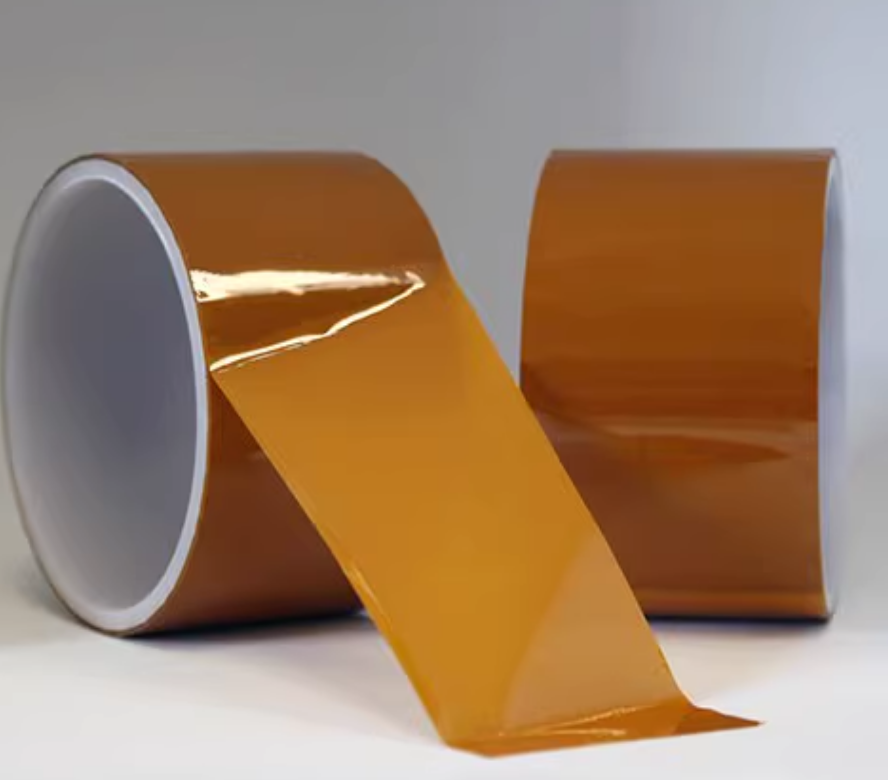
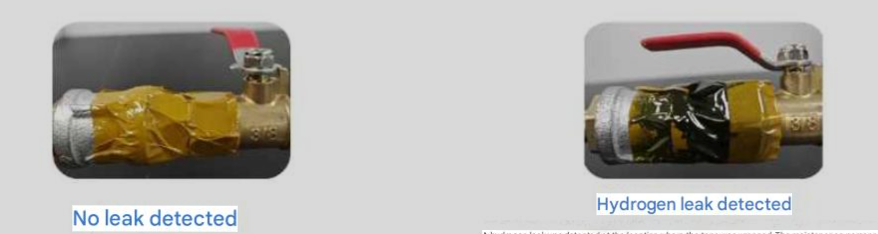
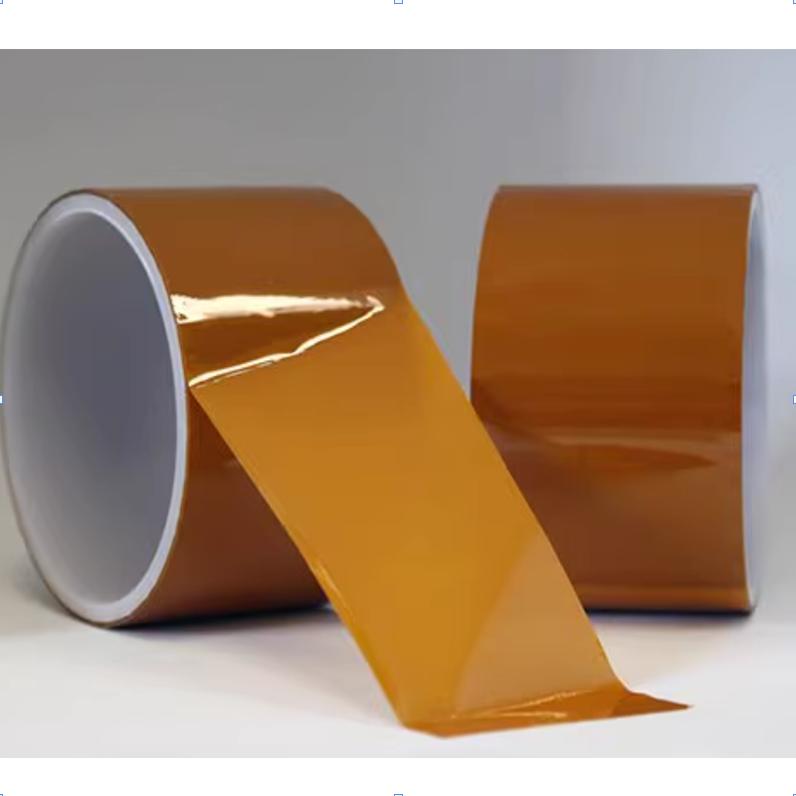
The Visual Hydrogen Leak Detection Tape provides a reliable, non-powered, passive safety layer for hydrogen gas systems. Engineered with a durable polyimide backing and a reactive chemical indicator layer, the tape changes color rapidly from Amber to Dark Black upon contact with escaping hydrogen gas ($H_2 \ge 1\%$).
It enables safety inspectors and plant engineers to visually pinpoint exact micro-leak locations across extensive piping networks without relying solely on electronic point sensors or bubble-test fluids.
Technical Specifications (Engineering Datasheet)
Below is the standard specification matrix for chemical compatibility and safety engineering review:
| Technical Parameter | Engineering Value | Compliance & Test Standards |
| Backing Film Material | Premium Polyimide (Kapton Equivalent) | High Thermal & Chemical Stability |
| Detection Target | Hydrogen Gas ($H_2$) | Selective to $H_2$ (Zero False Positives) |
| Detection Sensitivity | $1\% \, H_2$ Concentration | Detects well below Lower Explosive Limit ($4\% \, H_2$) |
| Response Time | $< 10 \text{ Seconds}$ (at $2\% \, H_2$) | Rapid visual indication |
| Color Change Mechanism | Distinct Amber $\rightarrow$ Black Transition | Irreversible / Permanent record of exposure |
| Operating Temperature | $-40^\circ\text{C}$ to $+150^\circ\text{C}$ ($-40^\circ\text{F}$ to $+302^\circ\text{F}$) | Suitable for extreme climate & indoor plants |
| Adhesive Type | High-Tack Silicone Pressure Sensitive | Clean removal with zero pipe residue |
| Standard Roll Dimensions | $25\text{ mm} \times 10\text{ m}$ ($1" \times 33\text{ ft}$) | Custom width & length available for OEMs |
![Visual color change of hydrogen leak detection tape showing amber normal state vs black leak detected state on valve joint]()
Strategic Advantage: The tape functions as a cost-effective "Layer of Protection" (LOPA) that complements existing digital systems without adding to the electricity bill or maintenance schedule.
Passive Visual Monitoring vs. Electronic Gas Sensors
For procurement managers evaluating Total Cost of Ownership (TCO) and plant safety compliance:
| Safety Feature | Electronic Point Sensors | Visual Hydrogen Detection Tape |
| Leak Localization | General area alarm only | Exact pinpoint visual location |
| Power Requirement | Continuous Electricity / Battery | 100% Passive (Zero Power Needed) |
| Calibration & Maintenance | Required every 6–12 Months | Zero Calibration Required |
| Outdoor / Wind Interference | High Blind-Spot Risk | Direct Contact Seal (Zero Blind Spots) |
| Infrastructure CAPEX | High Wiring & Hardware Cost | Cost-Effective "Layer of Protection" |
Typical Industry Applications
- Hydrogen Refueling Stations (HRS): Wrapping high-pressure dispenser couplings, valve manifolds, and storage banks.
- Electrolyzers & Production Plants: Flange connections, compressor shaft seals, and gas purification skids.
- Chemical & Fertilizer Refineries: Ammonia / $H_2$ synthesis piping, gas cabinets, and storage tanks.
- Fuel Cell Test Benches: Visual leak verification during R&D testing and vibration endurance trials.
Procurement & Ordering Information
- Standard Stock Dimensions: $25\text{ mm} \times 10\text{ m}$ ($1" \times 33\text{ ft}$) per roll.
- Custom OEM Options: Custom roll widths ($12\text{ mm}$ to $500\text{ mm}$) and die-cut flange gaskets available upon request.
- Packaging: Moisture-proof sealed vacuum foil bags for long shelf-life storage.
Frequently Asked Questions (Engineering FAQs)
Q1: Does the tape recover its original color after the hydrogen leak is stopped?
A: This tape features a permanent (irreversible) color change mechanism. Once exposed to hydrogen ($H_2 \ge 1\%$), the amber color turns dark black and stays black. This provides an indisputable, permanent audit trail for maintenance teams even if the gas flow is shut off.
Q2: Will rain, UV exposure, or atmospheric moisture trigger false color changes?
A: No. The reactive element is specifically synthesized for selective chemical reaction with hydrogen gas ($H_2$). It is fully weather-sealed, UV-hardened, and resistant to rain, humidity, and common industrial solvents.
Q3: Is the adhesive safe for stainless steel and alloy piping?
A: Yes. We use a high-purity, non-corrosive silicone adhesive that will not cause stress corrosion cracking or leave gummy residues on stainless steel, carbon steel, or aluminum alloy surfaces.
Request Datasheet & Technical Samples
Need chemical compatibility charts, MSDS/SDS sheets, or sample rolls for plant trials?