



SF Internal Snap-On Flexible Connectors: The Engineering & Procurement Guide for Food & Flour Processing Lines
The Engineering Challenge: Why Hose Clamps Fail in Food & Flour Processing
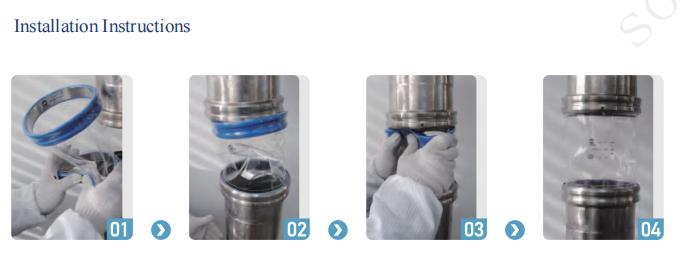
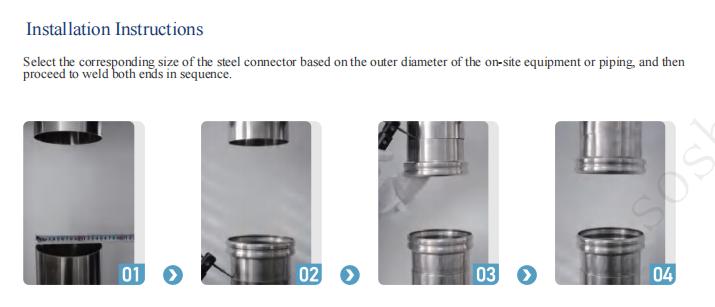
In 24/7 continuous flour milling and high-volume powdered food production, traditional hose-clamped flexible sleeves create major hygiene and operational risks:
- Flour Dust Explosion & Leakage Risks: Flour, starch, and sugar dust are highly combustible. Vibration-induced clamp loosening releases fine airborne particles into processing halls, triggering dust explosion risks.
- Product Accumulation & Pest Hazards: External clamps pinch flexible sleeves, creating internal folds where organic powders accumulate. Damp flour build-up quickly leads to mold growth and pest infestation.
- High-Frequency Sifter Wear: Plan sifters and vibratory screeners subject flexible joints to continuous multi-axis motion. Worm-gear clamps frequently slip or tear the sleeve material.
- Costly Downtime on High-Volume Lines: In industrial bakeries or flour mills, replacing dozens of clamped sleeves during sanitation cycles requires tools and hours of manual labor, cutting directly into daily tonnage throughput.
The Solution: SF Internal Snap-On Sealing Technology
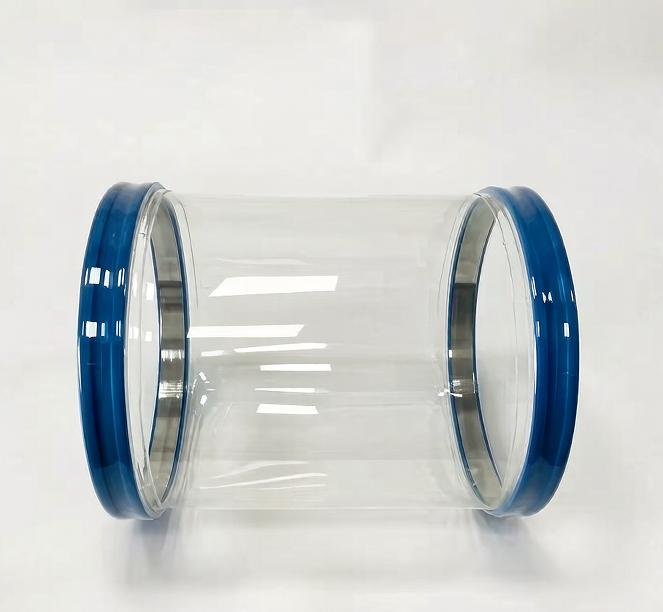
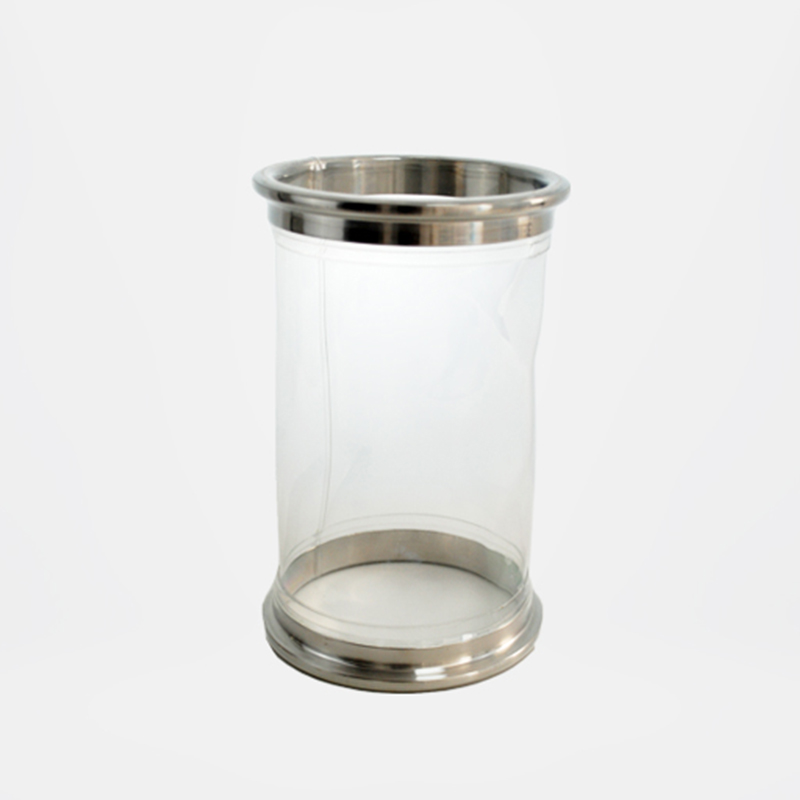
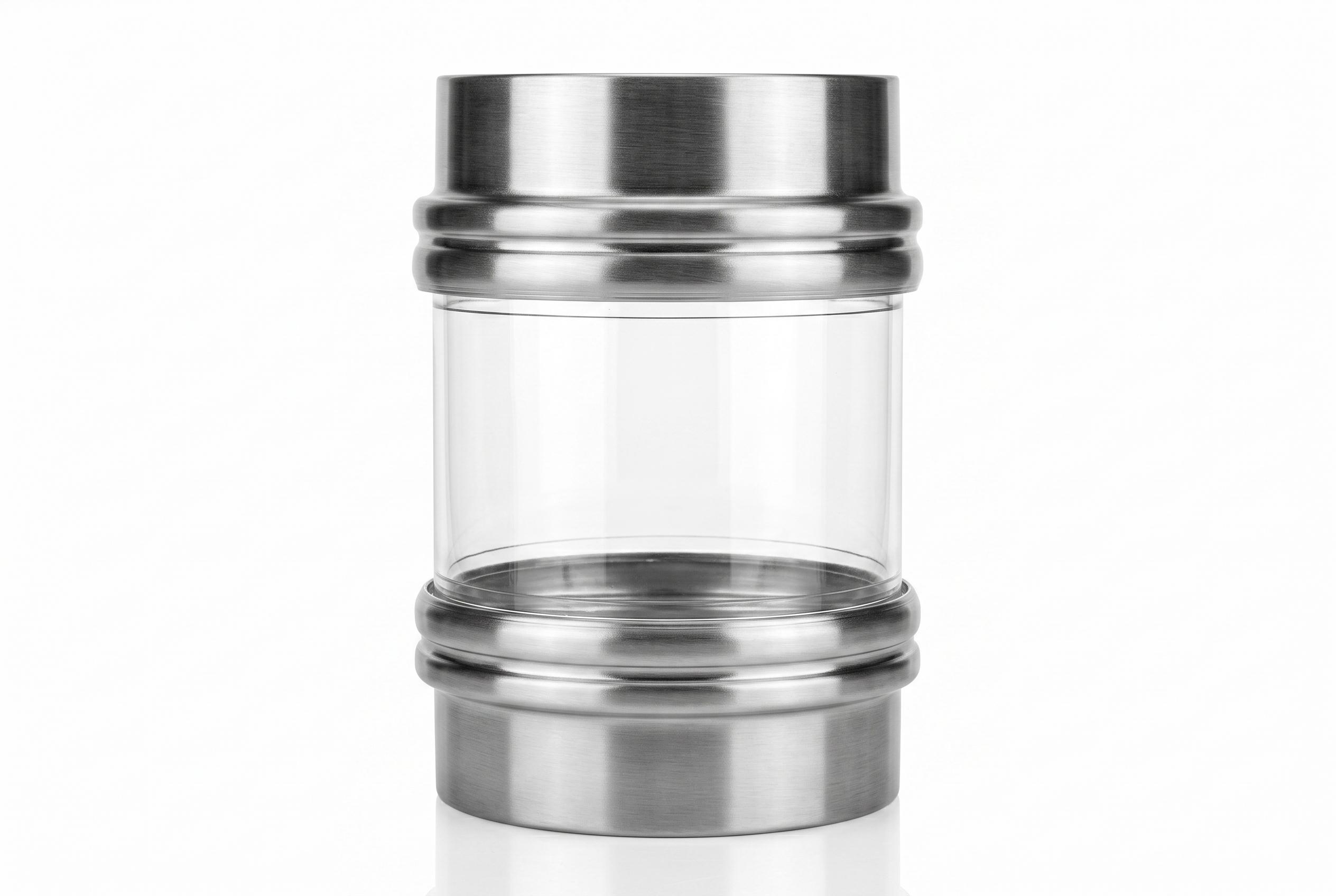
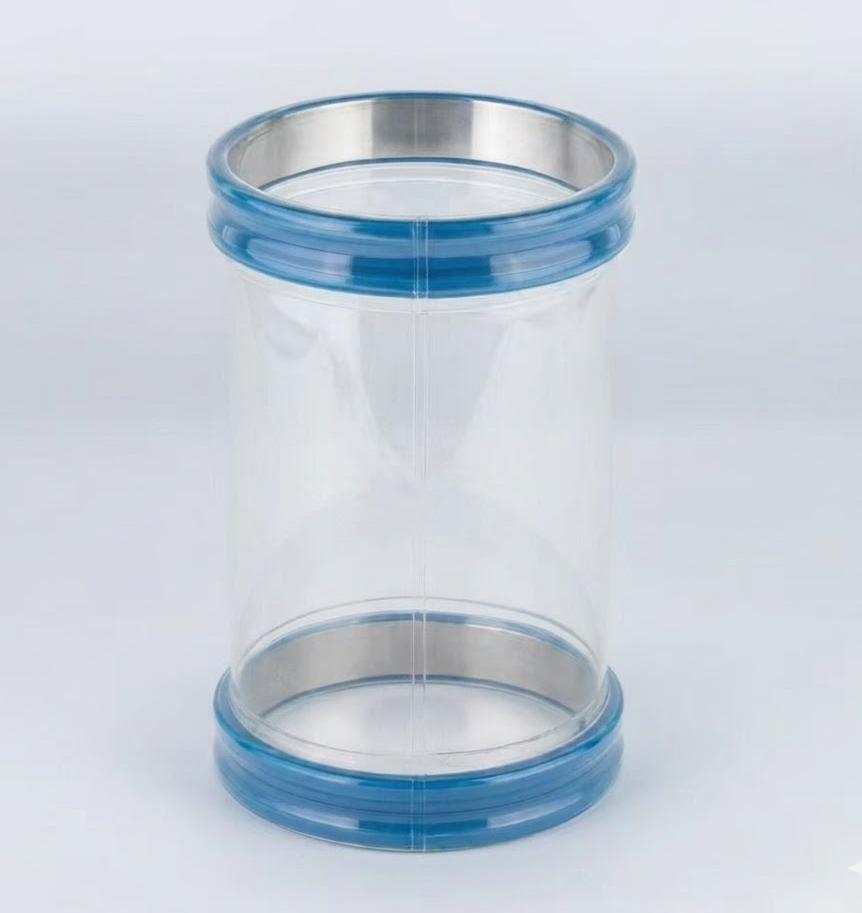
The SF Internal Snap-On Flexible Connector solves these challenges through an internal snap-ring mechanism that seals smooth and flush from inside the pipe.
Key Mechanical & Hygienic Advantages:
- 30-Second Tool-Free Changeover: Maintenance teams compress the internal spring-steel ring by hand and snap it into place. Whole-plant sleeve replacements take minutes instead of hours.
- Crevice-Free Hygienic Interior: The flush internal seal eliminates dead zones, preventing food powder entrapment and enabling fast CIP (Clean-in-Place) and dry-cleaning cycles.
- Continuous Radial Sealing Pressure: The tensioned stainless-steel ring maintains steady outward pressure against the mating joint, ensuring a dust-tight seal under severe vibratory forces.
Technical Specifications & Compliance Sheet
Below is the specification matrix for food safety compliance and engineering review:
| Technical Parameter | Engineering Specification | Compliance & Standard |
| Sleeve Material | Solid-Molded Polyurethane (TPU) | Food-Grade / FDA Compliant |
| Food Safety Compliance | FDA 21 CFR 177.2600 & EC 1935/2004 | 100% Phthalate & Heavy Metal Free |
| Surface Resistivity | < 10⁹ Ω (Anti-Static Option) | ATEX Dust Explosion Proof (Combustible Dust) |
| Operating Temperature | -20°C to +85°C (Continuous) | High-Temp Food-Grade Silicone Options |
| Pressure Rating | Positive: Up to 0.2 bar; Vacuum: Up to -0.4 bar | Reinforced Vacuum Ring Options Available |
| Standard Diameters (D) | 102 mm to 804 mm (4" to 32") | Custom Diameters Available for OEM Spigots |
| Standard Lengths (CL) | 100 mm to 1000 mm | Flexible Custom Lengths Starting at 80 mm |
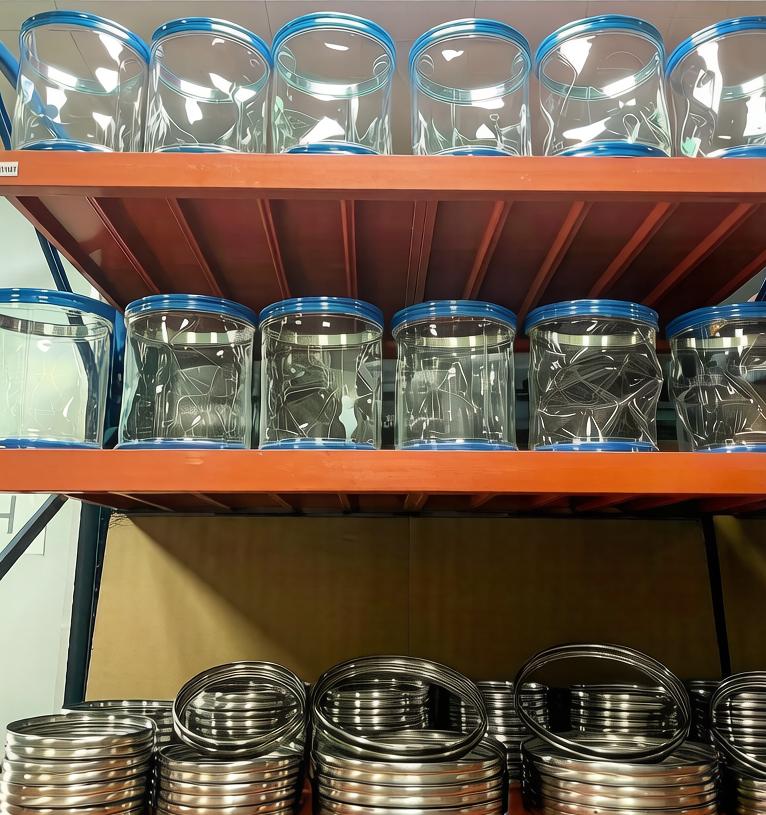
Technical Comparison: SF Snap-In vs. Traditional Hose Clamps vs. Proprietary Internal Lock Systems
When evaluating flexible connectors for high-volume grain processing plants, procurement teams must weigh uptime, food safety, and overall cost per unit:
| Evaluation Feature | Traditional Hose Clamping | Proprietary Internal Lock Systems | SOSHH SF Snap-In Connector |
| Installation Speed | 10 – 15 Mins (Tools Required) | < 30 Seconds (Tool-Free) | < 30 Seconds (Tool-Free) |
| Internal Hygiene | High Risk of Powder Accumulation | Crevice-Free / Smooth Flow | Crevice-Free / Smooth Flow |
| Explosive Dust Safety | Frequent Leaks under Vibration | Dust-Tight / ATEX Compliant | Dust-Tight / ATEX Compliant |
| Supply Chain & Lead Time | Standard Stock | Proprietary Lock-In / Long Lead | Direct Manufacturer / Fast Global Dispatch |
| Procurement Cost | Low Initial / High Labor Maintenance | Premium Brand Pricing | High Cost-Efficiency (Direct Factory) |
Target Applications in Food & Grain Processing
SF Snap-In Flexible Connectors are purpose-built for high-throughput food handling interfaces:
- Flour Milling & Grain Handling: Plan sifters, vibratory screeners, cyclone discharges, and roller mill inlets/outlets.
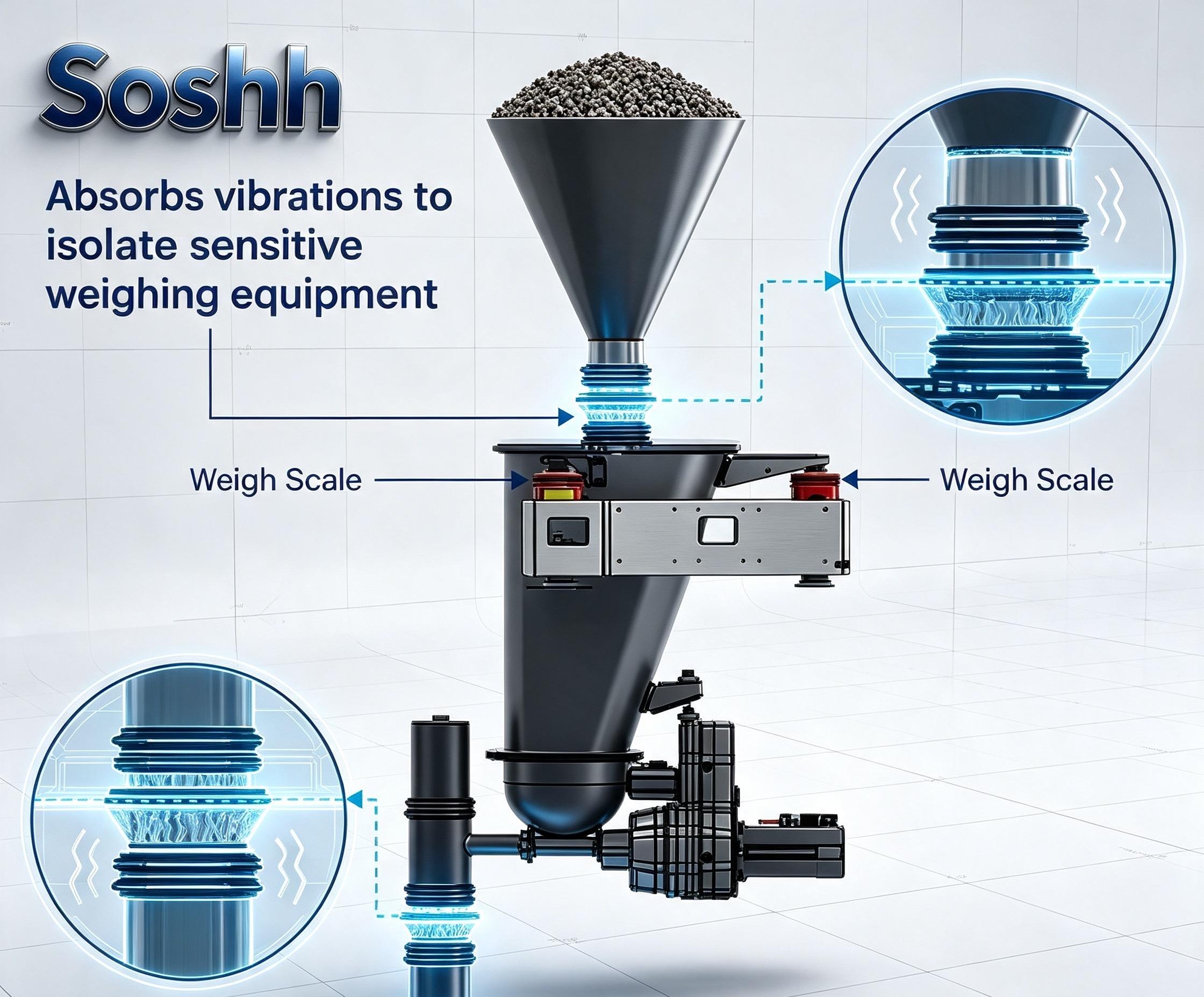
- Industrial Bakery & Milling Operations: Flour pneumatic conveying lines, loss-in-weight feeders, and batch mixing hoppers.
- Dairy & Powdered Beverage Lines: Infant formula spray drying towers, milk powder bagging stations, and cocoa processing.
- Sugar & Starch Processing: Sugar pulverizers, starch fluid bed dryers, and packaging machine chutes.
Frequently Asked Questions (Food Safety & Procurement FAQs)
Q1: Are these flexible connectors certified for direct food contact?
A: Yes. All SOSHH food-grade polyurethane sleeves are fully tested and compliant with FDA 21 CFR 177.2600 and European EC 1935/2004 standards, ensuring zero toxicity, odor, or contaminant transfer into flour or organic food powders.
Q2: How do these connectors prevent dust explosions in flour mills?
A: We offer an ATEX-compliant anti-static TPU sleeve with a surface resistivity below 10⁹ Ω. This continuously dissipates static charges generated by high-velocity flour particles, preventing static spark ignition in Zone 20/21/22 dust hazard zones.
Q3: Can we retrofit these sleeves onto existing internal-groove steel spigots?
A: Absolutely. If your flour mill or food plant already uses standard internal snap-groove steel joints, our SF Internal Snap-On sleeves drop directly into place with perfect dimensional fit and sealing integrity.
Request Food-Grade Samples & Technical Quotations
Upgrading your processing lines or sourcing reliable replacement sleeves for high-volume flour/food production?
- Technical Support: OEM customization and global bulk supply for food processing machinery manufacturers and grain mills.

Related Posts