



Custom PTFE Flexible Connectors: Engineering & Sourcing Guide for Chemical Lines
A Practical Guide to Custom PTFE Flexible Connectors
When standard off-the-shelf rubber or canvas hose fittings fail under extreme thermal stress, aggressive chemical exposure, or heavy machinery vibration, custom PTFE (Teflon™) flexible connectors are the industry-proven solution. However, finding the exact-fit non-metallic expansion joint for complex industrial ductwork is rarely a "one-size-fits-all" process.
Whether you are designing a high-purity pharmaceutical processing line, a petrochemical exhaust system, or handling bulk powder conveying, this guide breaks down the core geometries, engineering trade-offs, and critical sourcing specifications.
1. Primary PTFE Flexible Connector Geometries
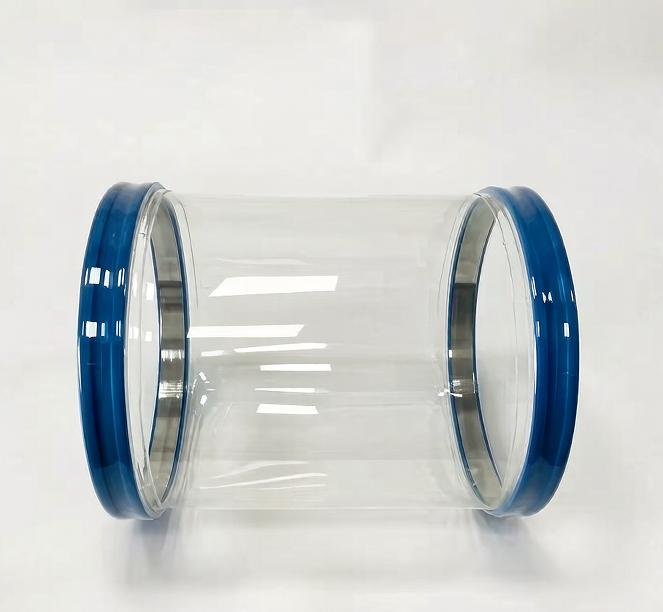
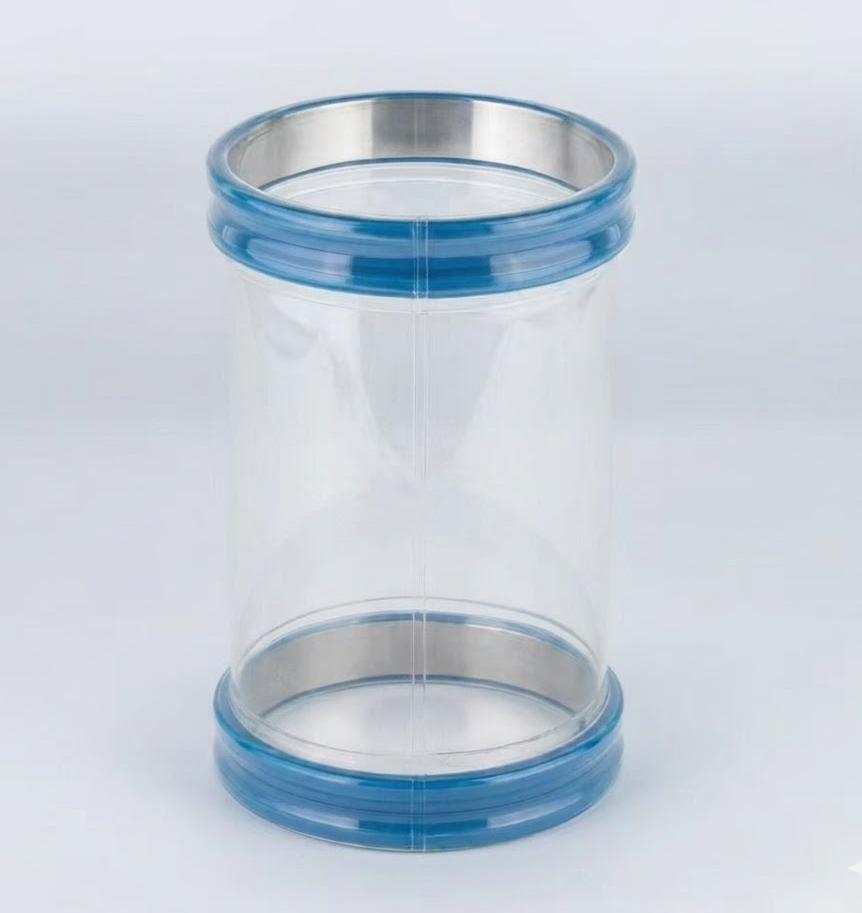
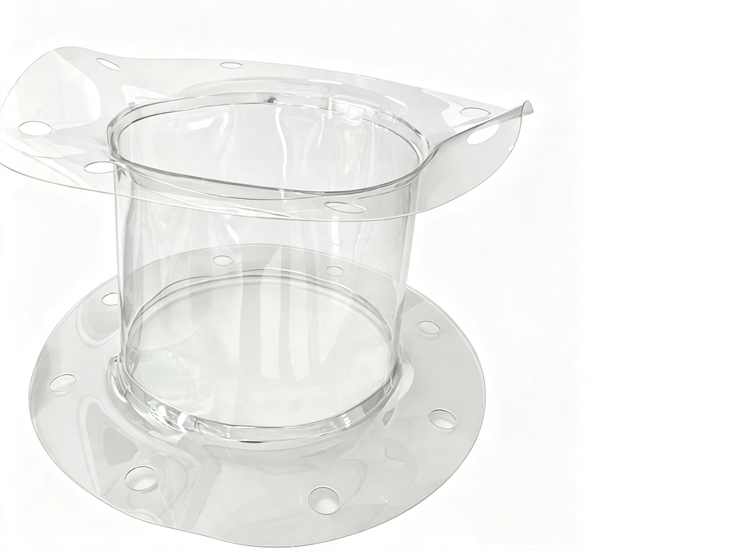
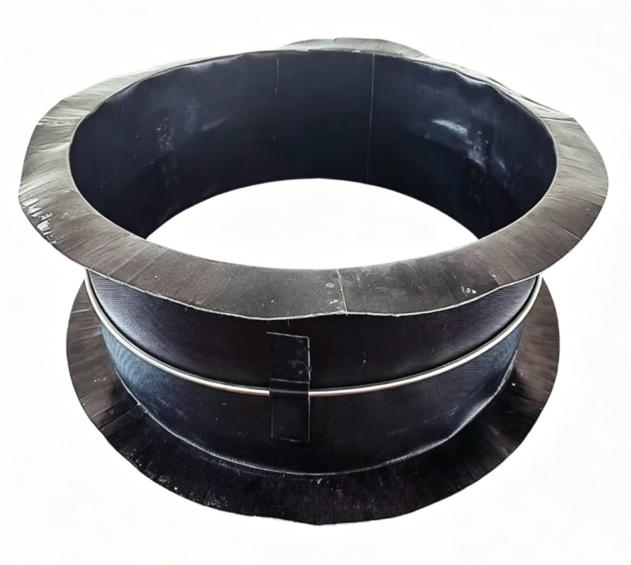
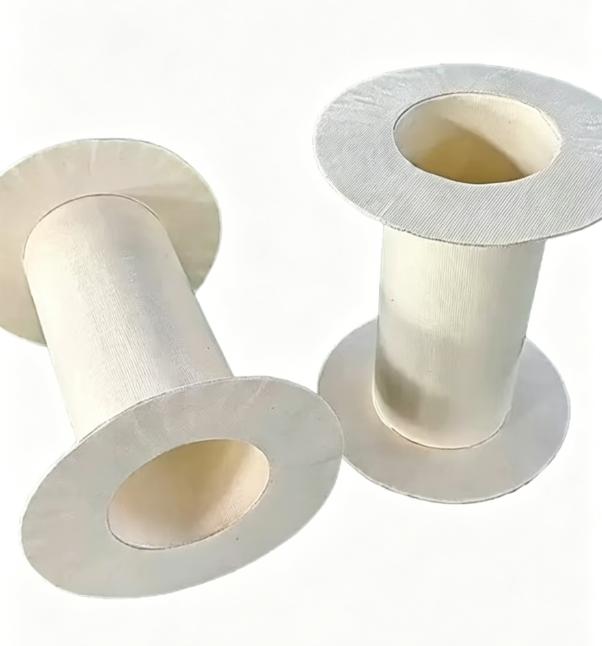
Flanged Tubular Flexible Connectors
- What It Is: A straight PTFE sleeve engineered with built-in flat flanges or rolled cuffs on both ends, pre-punched to match custom or standardized bolt circle patterns (ANSI B16.5, DIN PN10/PN16, JIS).
- Engineering Problem Solved: Ideal for bridging rigid pipes that suffer from minor axial misalignments, absorbing high-frequency mechanical vibration from vibratory feeders or pumps, and preventing material build-up due to PTFE’s ultra-low coefficient of friction.
- For heavy negative pressure or high-vacuum lines, consider upgrading to our Heavy-Duty PTFE Corrugated Bellows.
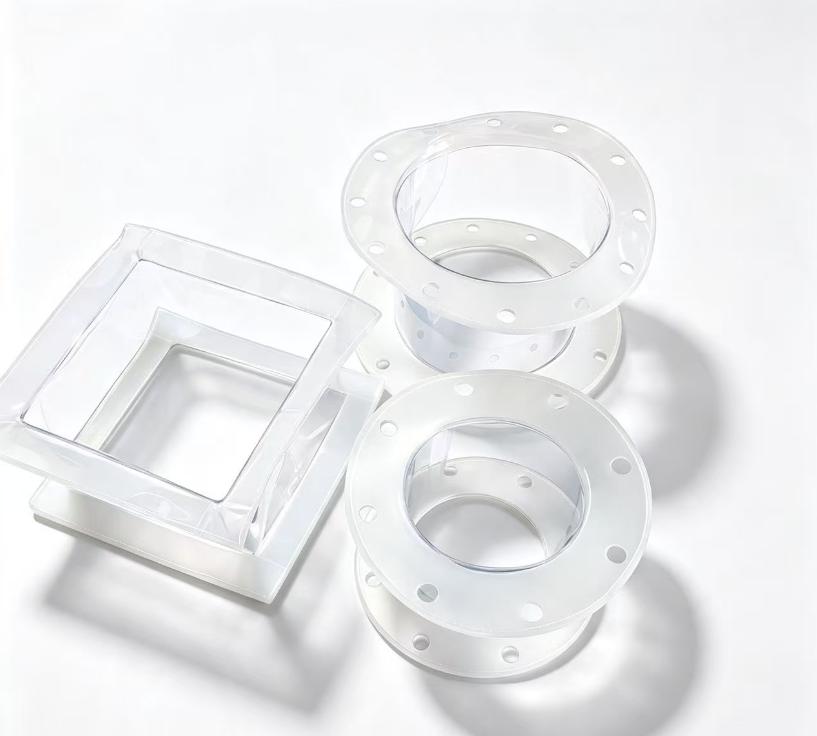
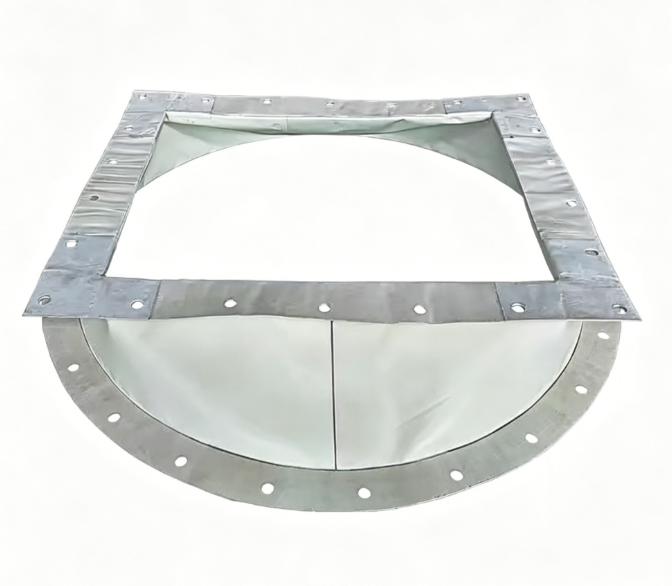
Square-to-Round Transition Connectors
- What It Is: A custom-fabricated non-metallic transition piece featuring a rectangular/square flange on one side and a circular flange on the opposing end.
- Engineering Problem Solved: Square-to-round transitions cannot be purchased off the shelf. They are custom-tailored to connect dismally aligned equipment shapes, such as a square cyclone discharge or storage hopper feeding directly into a round rotary valve or conveying pipeline.
Square-to-Round Transition Connectors
- What it is: A custom transition piece with a square flange on one end and a round flange on the other.
- The Problem it Solves: You can't buy these off the shelf. They are custom-made to connect misaligned or differently shaped equipment, such as a square hopper feeding into a round pipe.
2. Common Sourcing Problems & How We Fix Them
Sourcing custom non-metallic expansion joints and chemical-resistant sleeves can be frustrating for procurement teams. Here is how our flexible trading & engineering supply chain solves common manufacturing bottlenecks:
| Sourcing Challenge | Why It Happens | SOSHH® Engineering Solution |
| High Minimum Order Quantities (MOQ) | Traditional rubber factories reject single-piece replacement or small-batch custom runs. | Low MOQ & Rapid Prototyping: We support small-batch, custom-engineered orders without insane setup markups. |
| Mismatched Bolt Holes On-Site | Standard connectors arrive, but pre-punched bolt holes do not align with field piping. | Pre-Production CAD Verification: We confirm 2D/3D CAD dimensional sketches prior to production to guarantee a 100% perfect fit. |
| Complex Multi-Layer Demands | System requires high temperature resistance, chemical inertness, and structural strength simultaneously. | Custom Composite Layering: We layer PTFE films with high-strength fiberglass or Kevlar backings for combined chemical inertness and pressure capability. |
3. Key Specifications to Include in Your RFQ
To ensure an accurate quote and zero engineering revisions, ensure your Request for Quotation (RFQ) includes the following operating parameters:
- Operating Temperature & Pressure Range: Specify continuous and peak operating temperatures (PTFE handles -70°C to +260°C / -94°F to +500°F).
- Conveyed Media: Specify the exact chemical composition, acid/alkali concentration, or abrasive powder grit level.
- Dimensional Geometry: Provide Inner Diameter (ID), Outer Diameter (OD), Flange Center-to-Center distance, and Overall Length (OAL). For transition joints, specify horizontal width (A) and vertical height (B).
- Flange & Bolt Pattern Standard: Indicate if custom bolt holes match ANSI, DIN, JIS, or require an un-punched lip for quick-release V-band clamps.
💡 Need Custom Engineering Assistance or CAD Specs?
Download our comprehensive to access full dimensional tables, ATEX/FDA material compliance data, and ordering templates
Related Posts