



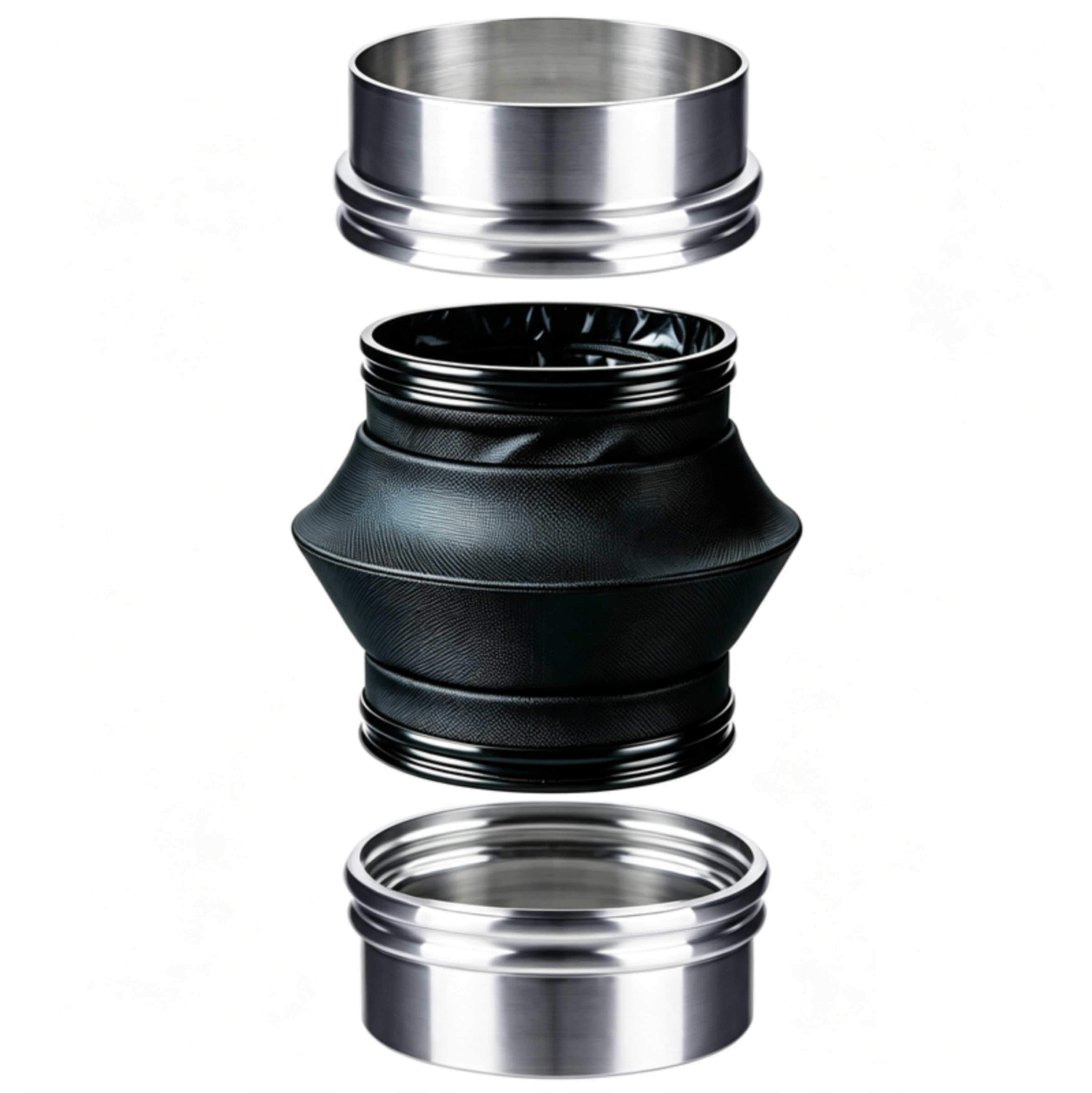
How to Eliminate Weighing Drift in Loss-in-Weight Feeders
Scale Drifting? It is Usually the Connector, Not the Sensor
If your loss-in-weight (LIW) feeder experiences weight drift or batching inaccuracies, maintenance teams often jump to re-calibrating load cells. In over 70% of process lines, however, the real culprit is mechanical interference caused by an improper flexible connector.
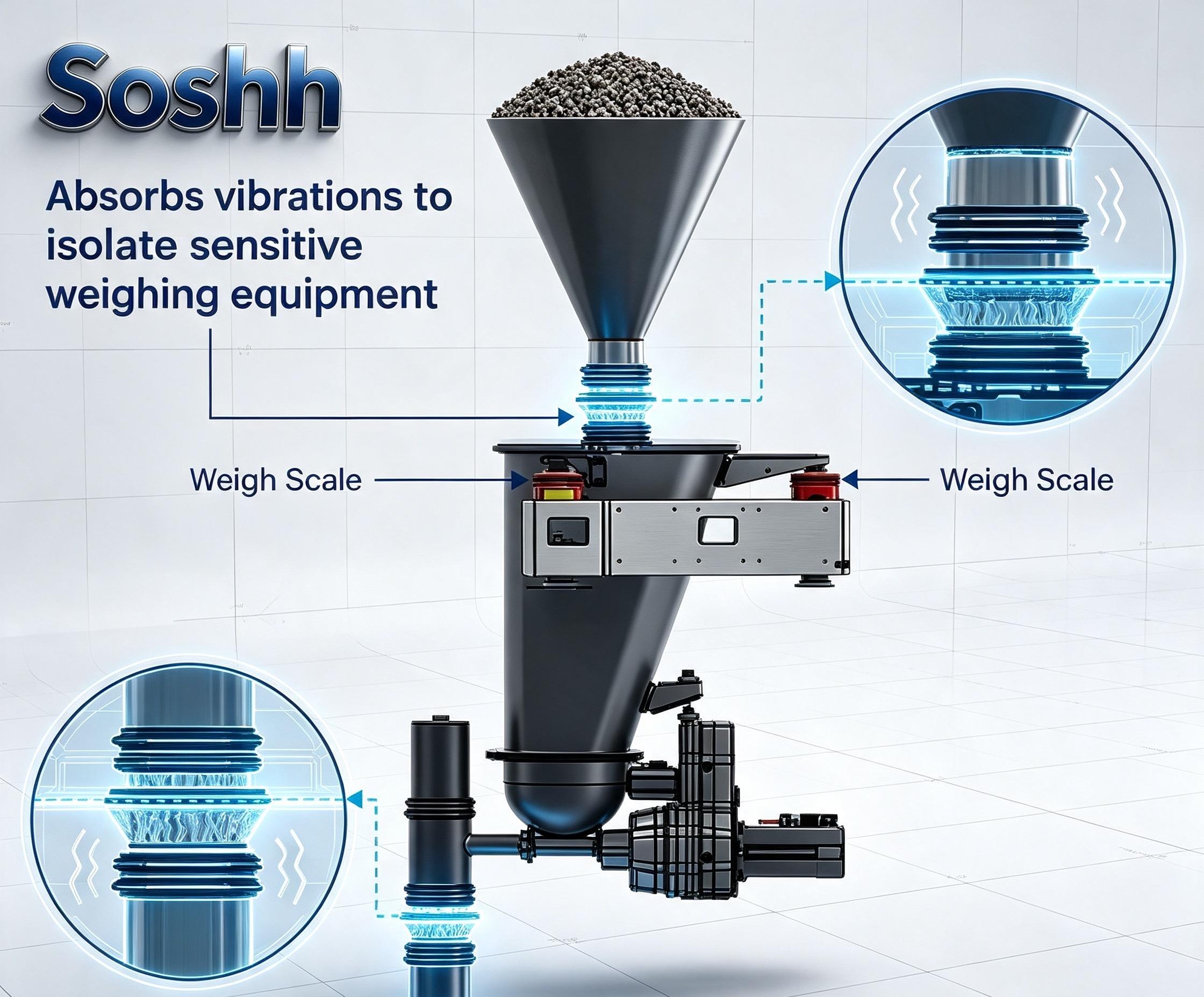
Standard thick sleeves exert upward or downward tension as the hopper empties—creating an unintended "spring effect" that distorts load cell signals.
The 3 Mechanical Causes of Weighing Failure
1. Spring Effect (Axial Stiffness)
As material empties, the hopper moves vertically. A stiff connector resists this movement, pushing or pulling on the scale and returning false weight readings.
2. Side-Load Shear Force
Angular misalignment between upper and lower spigots creates lateral forces. Load cells only measure vertical mass; side loads cause immediate drift.
3. Vacuum Collapse & Material Bridging
Under negative pressure (up to -40Kpa), thin sleeves collapse inward. This chokes material flow and creates powder accumulation that alters tare weight.
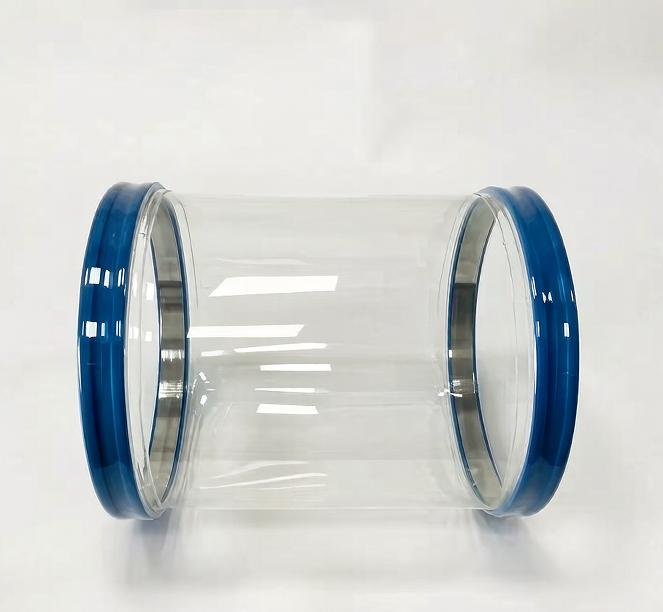
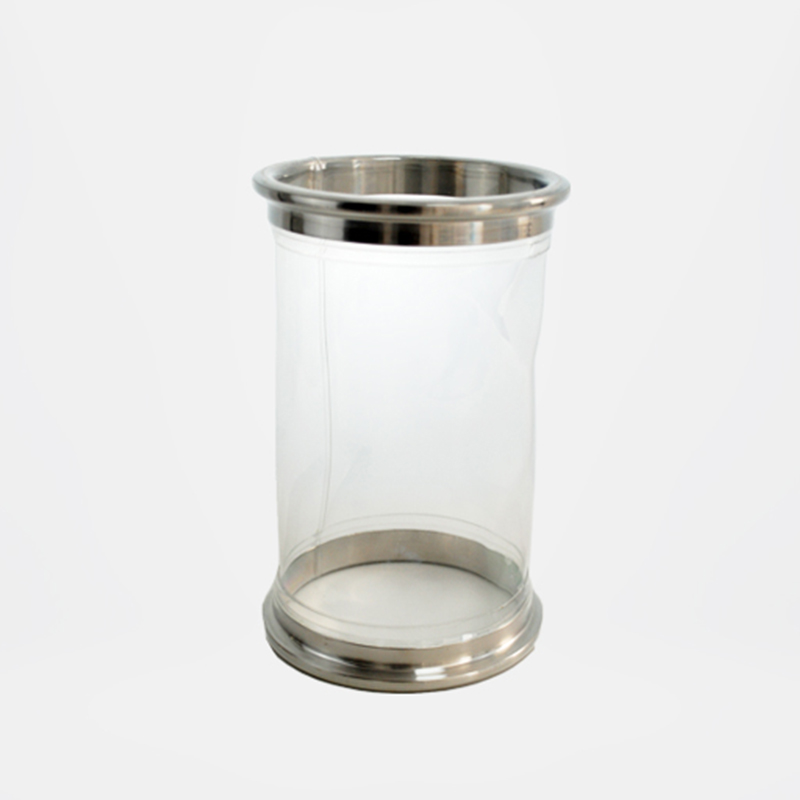
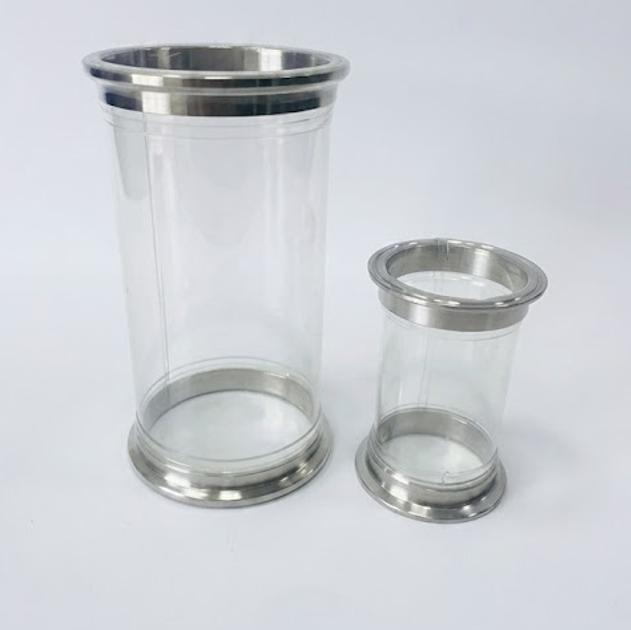
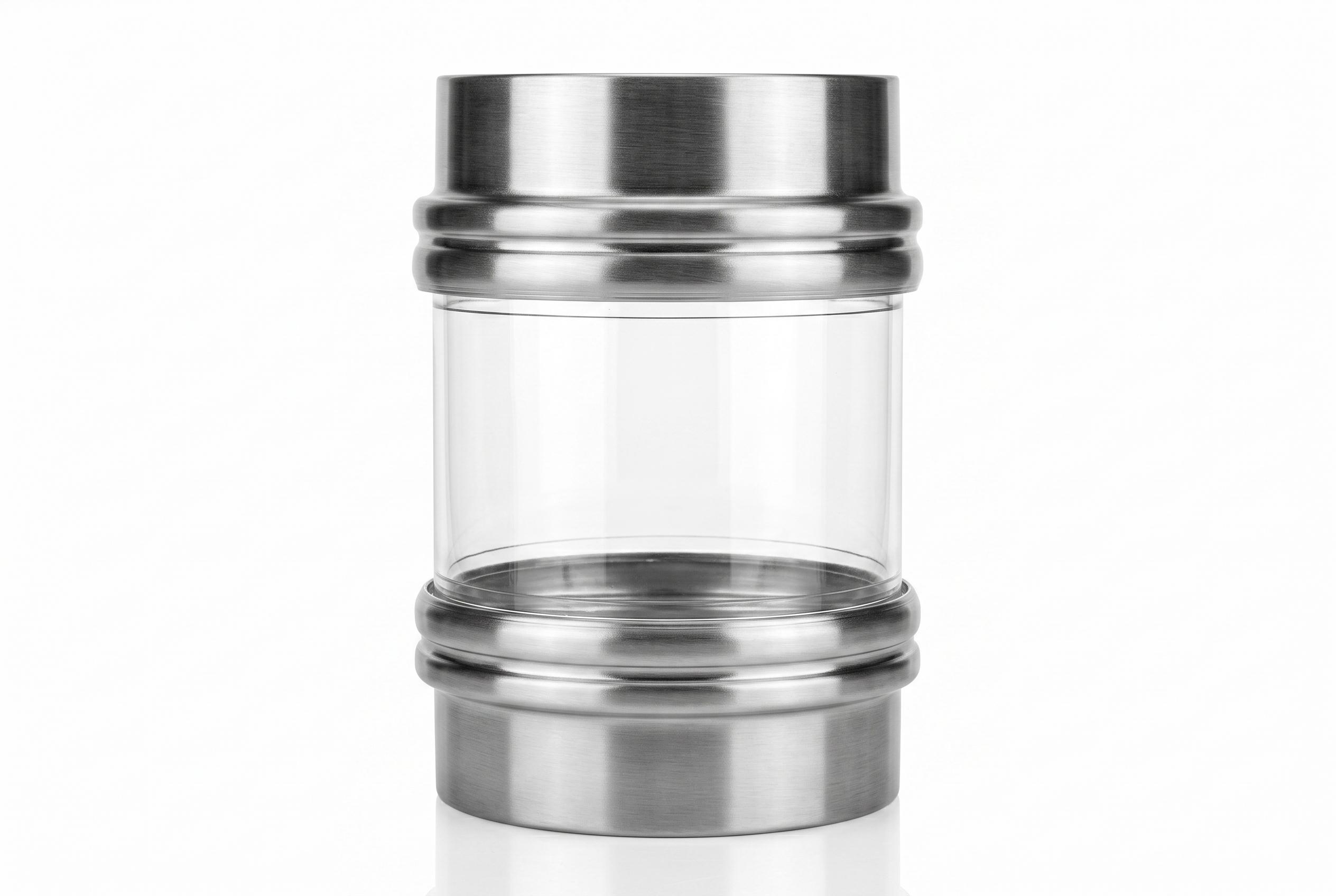
The Engineering Solution: SOSHH® SF-VacuScale™ PTFE Bellows
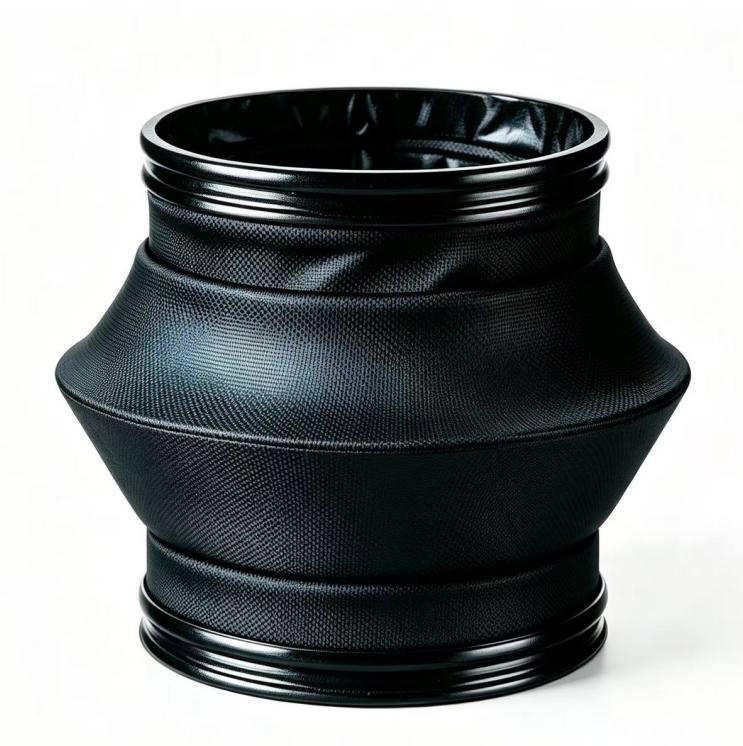
To isolate sensitive scales while maintaining an airtight seal, engineers are switching to 100% multi-pass sintered PTFE corrugated bellows.
Key Performance Advantages
- Zero Force Transmission: Corrugated geometry eliminates axial stiffness, ensuring zero interference with micro-dosing (<5kg/h).
- -40Kpa Vacuum Rating: Stainless steel skeleton prevents sleeve collapse under strong suction.
- Non-Stick Surface: Extremely low friction prevents sticky powders (TiO2, carbon black, battery materials) from clinging to inner walls.
- Thermal & Chemical Inertness: Operates continuously from -60°C to 220°C without softening or swelling in organic solvents.
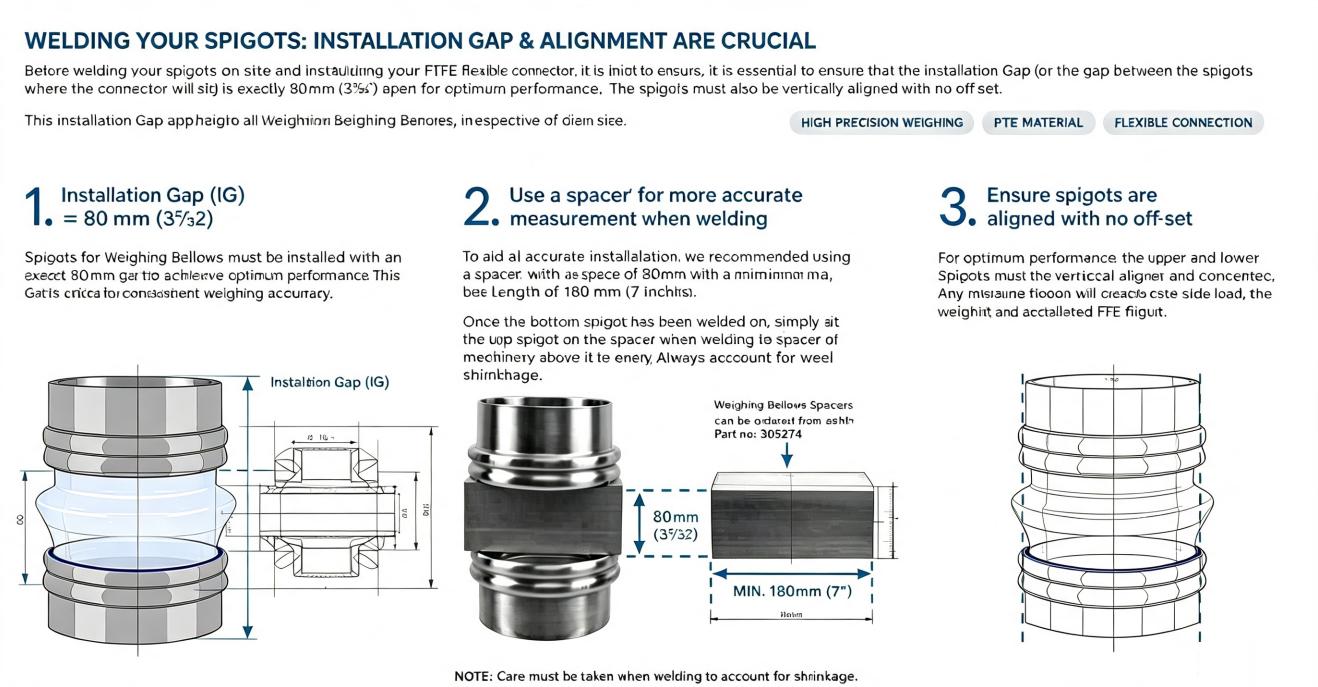
Critical Installation Rule: The 80mm Gap Standard
Even the best weighing bellows will fail if pre-stretched or compressed during site installation.
3 Steps for Flawless Installation
- Maintain Exact 80mm Gap (IG): Weld upper and lower spigots with an exact 80mm gap to keep the bellows in a neutral elastic state.
- Use an 80mm Welding Spacer: Always place a rigid spacer between spigots during welding to prevent thermal shrinkage distortion.
- Ensure Zero Offset: Vertically align spigot axes to eliminate side-loading on sensors.
Quick Material Selection Guide
- Standard TPU: Ideal for ambient, non-corrosive, food-grade dry powders. Swells in solvent vapors or heat (>80°C).
- Silicone: Highly flexible, but prone to tearing under continuous flexing and absorbing chemical vapors.
- Multi-Pass Sintered PTFE: Essential for corrosive chemicals, battery cathode powders, solvent vapors, and high-temp processing (-60°C to 220°C).
Quick FAQ for Plant Engineers
Q: Why does multi-pass sintered PTFE last longer than single-pass coated fabric?
A: Single-pass coatings only sit on the fabric surface and crack after a few hundred flex cycles. Multi-pass dip-sintering (3–6 passes) forces PTFE deep into the yarn matrix, forming an anchored structure built for long-term repeated deformation.
Q: Can these connectors be used in explosive powder environments?
A: Yes. Conductive/anti-static PTFE options are available for ATEX-regulated zones (e.g., carbon black, lithium powder processing).
Upgrade Your Batching Accuracy
Stop letting flexible sleeve interference compromise your product quality.
Explore detailed dimensions, CAD models, and technical specs:
👉 [View SOSHH® SF-VacuScale™ PTFE Product Details]
Related Posts