


Food-Grade Flexible Connectors: FDA Compliance, Material Selection and Applications in Saudi Arabia
Flexible connectors are the soft point of articulation between two rigid pieces of equipment within a food plant. This may occur between a sifter and a hopper, a mixer and a filler, or a silo and a conveyor. The flexible connector helps transport edible products through your equipment. If incorrect materials are used, the connector can contaminate the product, crack during cleaning and fail after only months. This guide covers everything you need to know about Food-grade flexible connectors, including FDA compliance, choosing the right material for your application, and key considerations when sourcing flexible connectors in Saudi Arabia.
What Are Food-Grade Flexible Connectors?
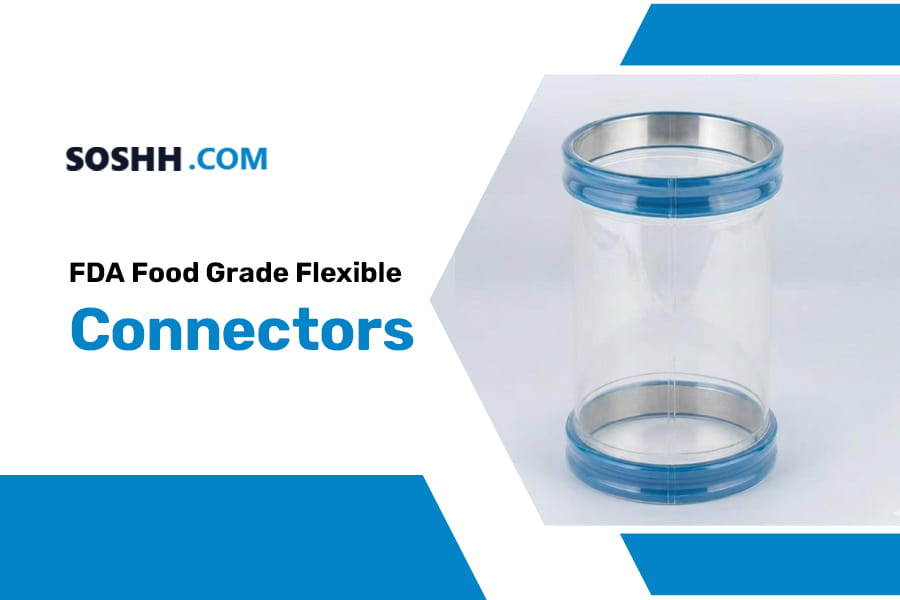
Food-grade flexible connectors are used in food applications to connect equipment using sleeve, boot or bellow type connections. The connector allows the product through without adding any harmful elements. These connectors also dampen vibrations, allow movement and misalignment, and seal in powders and liquids. They are a very common sight in food plants and can be found on vibrating sifters, screeners, mixers, fillers, bag dump stations and silo outlets.
Food grade refers to the materials used to make the connector, so they are safe to come into contact with the product. They should not leach harmful chemicals, should have no taste or smell, and should be easy to clean. However, the term is often used loosely in the market, so you should always ask what standards back up a supplier's claim of food grade.
The design of the connector is just as important. A hygienic connector has a smooth interior that does not allow product to get stuck in any crevices, and a tight seal on both ends. Crevices or loose edges cause residue to build up, which can spoil or attract pests. A good food-grade connector combines a safe material composition with a hygienic design.
What Makes a Flexible Connector FDA Food-Grade Compliant?
Whilst individual flexible connectors are not FDA approved or certified, the FDA does regulate the materials that come into contact with food. In the USA, such materials are subject to Title 21 of the Code of Federal Regulations. For rubber and elastomer articles that see repeated food contact, the key reference is FDA 21 CFR 177.2600. At SOSHH, our food-grade TPU connectors are tested against FDA 21 CFR 177.2600, and we supply the supporting documentation with your order.
It is very much a documentation issue. Compliance is specific to the product and depends on the formulation, the pigments and additives, and the manufacturing process. A product can be non-compliant even if it looks identical to a compliant one.
Many plants also look at regulations beyond the FDA. In Europe, food contact materials must meet EU 1935/2004 (Regulation (EC) No 1935/2004), and plastics are further covered by Regulation (EU) No 10/2011. A number of dairy plants will also be looking at 3-A sanitary standards. For more information, see our food grade compliance page.
When a supplier says its connectors are FDA food-grade flexible connectors, ask which regulations the materials meet and request written proof.
How to Choose the Right Material for Food-Grade Flexible Connectors
The material you choose will directly affect the connector's life and, of course, protect the product. Polyurethane is a common material for dry, dusty products, with good abrasion and tear resistance as well as flexibility. Silicone operates over a wide temperature range and is used in both hot and cold processes, although it can wear quickly against abrasive dust. PTFE has excellent chemical resistance and can be used in very aggressive environments, but is generally more expensive.
The product flowing through the connector, the temperatures, the level of cleanliness required and your cleaning method all need to be considered. A connector that is appropriate for flour may be totally unsuited to fat or acid. Transparent materials also let the operator spot buildup or damage early.
What Should Buyers Know About FDA Food-Grade Flexible Connectors?
Many buyers think FDA food-grade flexible connectors are interchangeable, and that is where the problems start. Compliance is about the material, not the product as a whole. A compliant connector can still fail if it is the wrong size, temperature rating or style for the movement it is subject to.
Ensure the connection to the equipment is secure, so product cannot get caught in grooves, which can become a breeding ground for bacteria. The internal surface should be smooth with no recesses. The connector should be wipeable, flushable and cleanable in place. Confirm the material is appropriate for the chemicals and temperatures involved.
Where Are Food-Grade Flexible Connectors Used in Food Processing?
You can find them nearly everywhere there is dry or semi-dry food handling. They are used in dairy plants on the powder lines such as milk and whey. In mills and bakeries, they are used on the flour sifting and mixing lines. Food processing industries, including sugar, spice, cocoa, and beverage powders, will have them fitted to screeners, hoppers, and filling lines. Pet foods and snacking industries will also use them.
Each industry will have different requirements. The dairy and baby feeding lines have strict hygiene standards. Bakers use fine, dusty flour. Spices require connections that prevent odor transfer. Matching the connection to the product ensures a clean process.
How to Source Food-Grade Flexible Connectors in Saudi Arabia
Saudi Arabia has a large food industry and can be a great place to find large-scale dairy and flour manufacturing plants. For buyers looking for a reliable supplier of food-grade flexible connectors in Saudi Arabia, it’s important to find one that provides the correct size and style, along with compliance certificates and post-sale support. It also makes sense to find a supplier local to your plant, as any downtime whilst waiting for parts can be expensive in a busy hot climate.
Ask about lead times, availability, and bespoke sizing. A custom flexible connector manufacturer can provide connectors that fit your equipment precisely. This will avoid issues where generic connectors do not fit. Ask if they understand the regulations in your market. Many plants require FDA or EU documentation, along with documentation required by the Saudi Food and Drug Authority.
What Compliance Documents Should You Request from a Supplier?
Always ask your supplier for supporting documents. Start with a Certificate of Compliance (CoC), which tells you which sections of FDA or European food contact regulations the material complies with. Where possible, also look at the material specification, test reports and migration results, which show how much could migrate into the food.
Ensure your supplier can provide batch traceability so you can identify the origin of every connector. If your facility has a hygienic design, confirm that the materials and connectors supplied meet the relevant requirements. We recommend that you retain all such documentation for audits, and request updated documentation whenever materials or suppliers change.
How to Select the Right Food-Grade Flexible Connector for Your Application
Write down what you know. What product are you connecting? What temperature, pressure/vacuum, vibration, and cleaning will it be subject too? How long are the connections? What movement does the connector need to accommodate? This will reduce your options very quickly.
Next, look at the method of attachment. Clamp-style and quick-release flexible connectors will obviously make removal for cleaning and inspection much quicker in a plant with a lot of changeover. Finally, you'll need to compare suppliers on the documentation, the level of support they provide, the lead time and of course the price. A slightly higher up front cost is usually going to be cheaper than a connector that fails and a stopped line.
Once you've got your connector in use it's pretty straightforward to maintain. As part of your regular servicing, you'll want to check for any cracking, thinning, discoloration, and loose clamps. If you're tracking your own wear rates then you can plan and replace the connectors before they actually fail. Having an extra one on hand for the critical lines will save a lot of time.
FAQs
What makes a flexible connector FDA food-grade compliant?
Its food-contact materials must meet the relevant FDA regulations for permitted ingredients and intended use. Ask the supplier for a written declaration naming the regulations.
What is the difference between food-grade and FDA-compliant flexible connectors?
Food-grade is a general term for materials safe for food contact. FDA-compliant means the materials meet specific US regulations and should be backed by documentation.
Where can I find food-grade flexible connectors in Saudi Arabia?
Look for suppliers that offer the right sizes, provide compliance documents, and offer local support. Soshh offers food-grade flexible connectors, including custom sizes on request.
Which material is best for food-grade flexible connectors?
There is no single best option. Polyurethane suits abrasive powders, silicone suits wide temperatures, EPDM suits hot water and steam, and PTFE suits harsh chemicals.
What documents should I request when buying FDA food-grade flexible connectors?
Request a declaration of compliance, material specifications, test or migration reports, and batch traceability records.