Lithium Battery Materials Flexible Connectors — Anti-Static & Zero-Metal Contamination
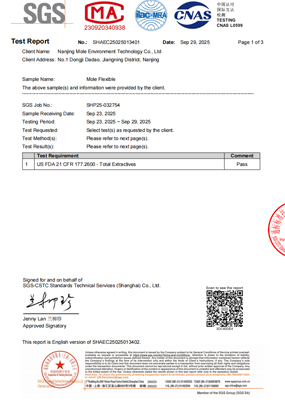
SOSHH lithium battery material flexible connectors are engineered specifically for cathode (NCM, LFP) and anode (graphite, synthetic carbon black) precursor transfer. Manufactured from inherently static-dissipative polyether TPU with surface resistivity strictly below 10⁹ Ω and SGS-verified volume resistivity of 4.02×10⁷ Ω (tested per IEC 62631-3-1:2023 under Report Ref: SHMR240801578301-1), our systems deliver 100% dust-tight containment, zero metallic contamination within the product-contact bore, and high wear endurance (40 MPa tensile, 39.0 mg DIN abrasion).
Lithium-ion battery cell manufacturing has zero tolerance for metallic contamination or electrostatic hazards. Loose copper, zinc, or steel fragments short out battery separator films, causing catastrophic cell fires and scrap-batch recalls. At the same time, high-velocity pneumatic transfer of fine electrode particles generates extreme triboelectric charges. SOSHH eliminates external metal grounding straps, combining intrinsic polymer dissipation, high tensile strength, and metal-free product contact.
1. Three Critical Containment & Safety Hazards in Battery Powder Lines
Conventional clamped canvas and rubber sleeves fail under the rigorous chemical, purity, and safety demands of modern gigafactories:
Electrostatic Charge Accumulation in Combustible Dust Atmospheres
Micronized carbon black, graphite, and organic additives generate high triboelectric voltage during pneumatic conveying and sifter oscillation. Standard non-conductive sleeves act as capacitors, accumulating static until an incendiary brush discharge ignites the combustible dust cloud. SOSHH dissipative TPU maintains surface resistivity below 10⁹ Ω and volume resistivity of 4.02×10⁷ Ω, bleeding charges to ground before sparks can form.
Foreign Metallic Particle Contamination (Cu / Zn / Fe)
Traditional flexible joints rely on exposed steel band clamps, brass eyelets, or external copper grounding braids. Mechanical vibration causes these metallic elements to fretting-corrode and shed conductive metal particles directly into the cathode or anode slurry path. SOSHH connectors feature high-frequency welded exterior cuffs; the retention band sits completely outside the fluid flow path, ensuring the entire product-contact bore is 100% non-metallic.
Abrasive Cutting by Hard, Angular Electrode Precursors
Cathode precursors (NCM/LFP) and hard carbon particles feature sharp, crystalline morphology that abrades standard silicone, vinyl, and woven canvas within weeks. SOSHH uses high-density virgin polyether TPU engineered to 40 MPa tensile strength, 600% elongation at break, and 39.0 mg DIN abrasion loss, outlasting traditional fabric sleeves under heavy vibratory duty.
2. Engineering Specification Matrix (SSOT Aligned)
| Engineering Parameter | SSOT Verified Specification | Battery Manufacturing Impact |
| Base Polymer Matrix | Static-Dissipative Polyether TPU | Inherent charge dissipation; 100% hydrolytically stable |
| Surface Resistivity (Rs) | < 10⁹ Ω | Dissipative rating; prevents surface static accumulation |
| Volume Resistivity (Rv) | 4.02×10⁷ Ω | Verified by SGS Shanghai (Report Ref: SHMR240801578301-1) |
| Electrical Test Standard | IEC 62631-3-1:2023 | Authoritative laboratory dielectric & resistive compliance |
| Metallic Contamination | 100% Metal-Free Product Bore | Zero copper (Cu), zinc (Zn), or exposed steel in contact zone |
| Tensile Strength | 40 MPa | Resists pressure surges and high-velocity pneumatic loads |
| Elongation at Break | 600% | High elasticity absorbs continuous multi-axis sifter strokes |
| DIN Abrasion Loss | 39.0 mg (DIN ISO 4649) | High mechanical resistance against abrasive NCM / LFP / graphite |
| Standard Thickness | 1.0 mm (PU-10-AS) | Optimal engineering balance between flex fatigue and wear life |
| Thermal Envelope | −20 °C to +110 °C | Withstands continuous process heat and washdown |
| Custom High-Temp / Solvent | CNC-Machined Virgin PTFE | Up to +260 °C continuous service; immune to NMP solvent vapors |
| Standard Diameter Range | Ø102 mm to Ø804 mm | Zero tooling charges on custom transitions, cones, and offsets |
3. Static Dissipation & Grounding Protocol: The Honest Engineering Standard
A common misunderstanding in hazardous-area plant design is assuming an anti-static sleeve eliminates plant grounding requirements:
- Sleeve Charge Dissipation: The SOSHH dissipative sleeve prevents charge build-up on the flexible element itself by maintaining surface resistivity below 10⁹ Ω.
- Plant Bonding Requirement: Metallic spigots and surrounding machinery must remain bonded to the plant earth system per your site electrical standards. The dissipative sleeve then safely routes static charges through the cuff into those grounded spigots.
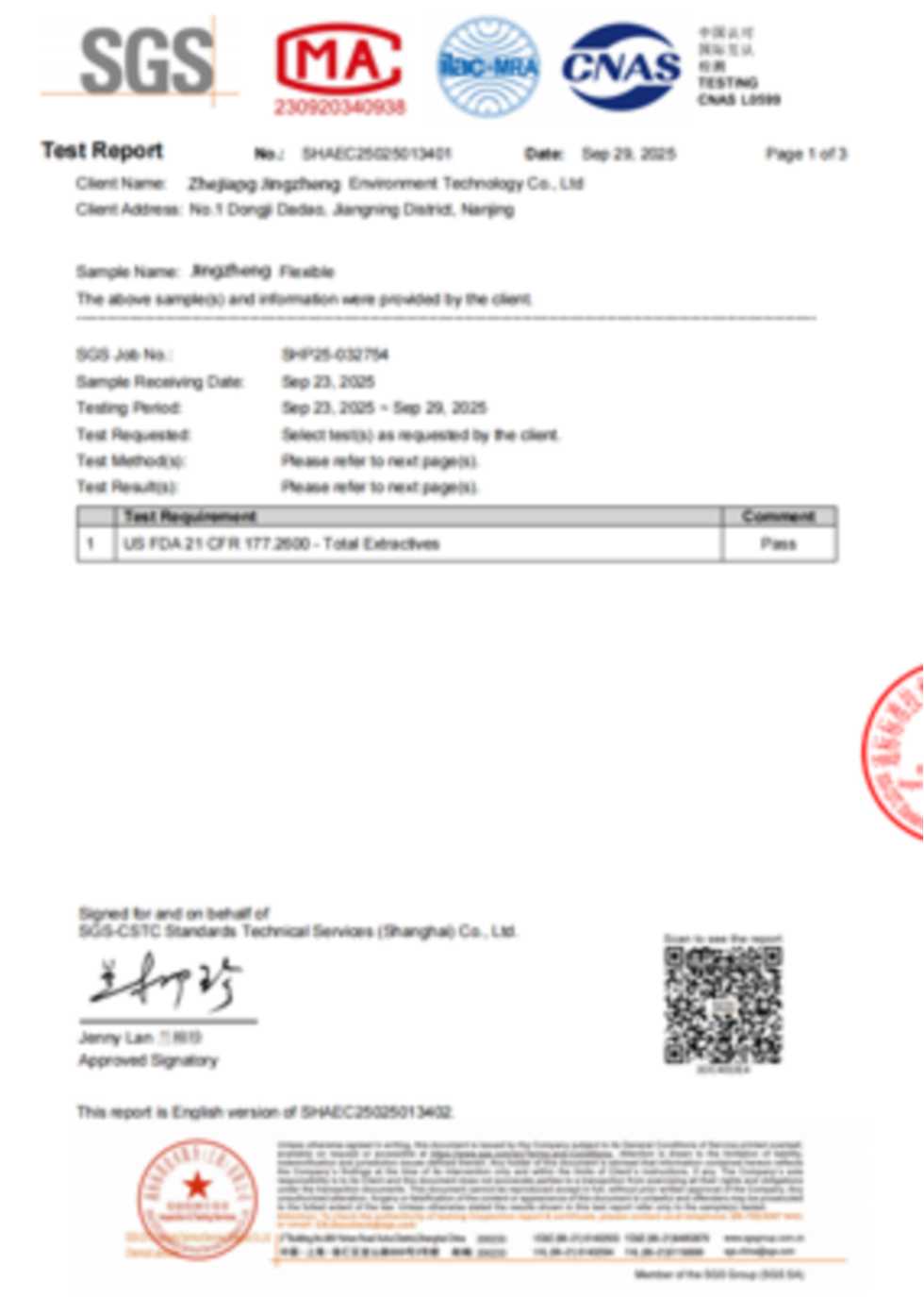
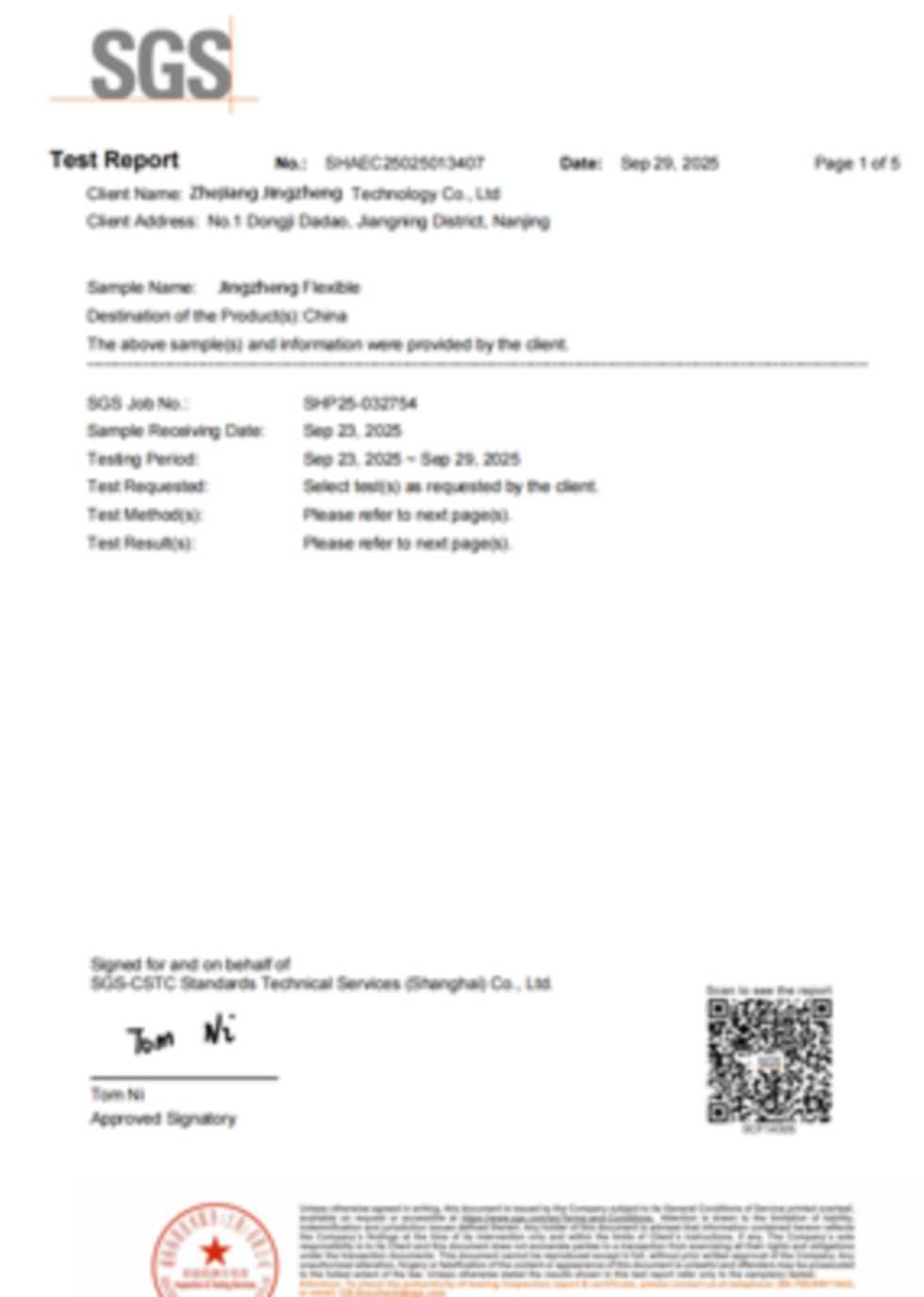
- ATEX Zone Support: SOSHH provides third-party SGS electrical test reports (Ref: SHMR240801578301-1) to support site hazardous-area documentation and ATEX Zone 20/21/22 assessments. Final operational classification rests with the site hazardous-area engineering team.
4. Frequently Asked Questions (FAQ) — Battery Materials
Q1: Is the anti-static flexible connector ATEX certified?
ATEX certification applies to complete operational equipment assemblies rather than standalone passive sleeves. SOSHH provides the official SGS test report (Report Ref: SHMR240801578301-1, tested per IEC 62631-3-1:2023) verifying volume resistivity of 4.02×10⁷ Ω and surface resistivity below 10⁹ Ω to support your site hazardous-area and ATEX Zone risk assessments.
Q2: Does using this dissipative sleeve eliminate the need for equipment earthing?
No. The dissipative sleeve prevents localized charge build-up on the connector wall, but the metal docking spigots and process piping must be bonded to the facility grounding grid. The sleeve transfers accumulated charges directly into those grounded spigots.
Q3: Will the connector shed metallic fragments into cathode or anode powder?
No. All mechanical snap-bands and structural elements are encased in high-frequency welded exterior cuff pockets. The internal contact bore consists exclusively of smooth, non-porous polyether TPU, guaranteeing zero metal-to-powder contact and preventing false inline metal detector triggers.
Q4: How does the sleeve hold up against abrasive NMC and LFP particles?
Our polyether TPU formulation provides 40 MPa tensile strength, 600% ultimate elongation, and DIN abrasion loss limited to 39.0 mg. This mechanical matrix resists cutting and abrasive wear from sharp-edged cathode precursors and hard synthetic graphite far better than silicone or fabric.
Q5: Can these sleeves handle vacuum and positive pressure in pneumatic lines?
Yes. Standard 1.0 mm sleeves handle low-pressure gravity drops and screener discharges. For high-velocity dilute or dense-phase pneumatic lines, we supply heavy-wall options and external stainless steel support rings to prevent vacuum collapse or pressure ballooning.
5. Request an Engineering Proposal & 24-Hour CAD Drawing
Confirm static dissipation (< 10⁹ Ω) and abrasion resistance for your electrode line. Submit the following five parameters directly to amin@soshh.com:
- [ ] Spigot Outer Diameter (OD): Seating channel outer diameter in mm
- [ ] Installation Gap (IG): Static face-to-face distance between rigid spigots in mm
- [ ] Active Media: Specific powder handled (NCM, LFP, synthetic graphite, carbon black)
- [ ] Pneumatic Conditions: Maximum operating positive pressure (bar) or vacuum level (mbar)
- [ ] Designated Safety Zone: Target ATEX Zone classification (Zone 20, 21, or 22)
Our engineering team returns a watermarked 2D outline drawing, SGS electrical test documentation, and quotation within 24 hours.