


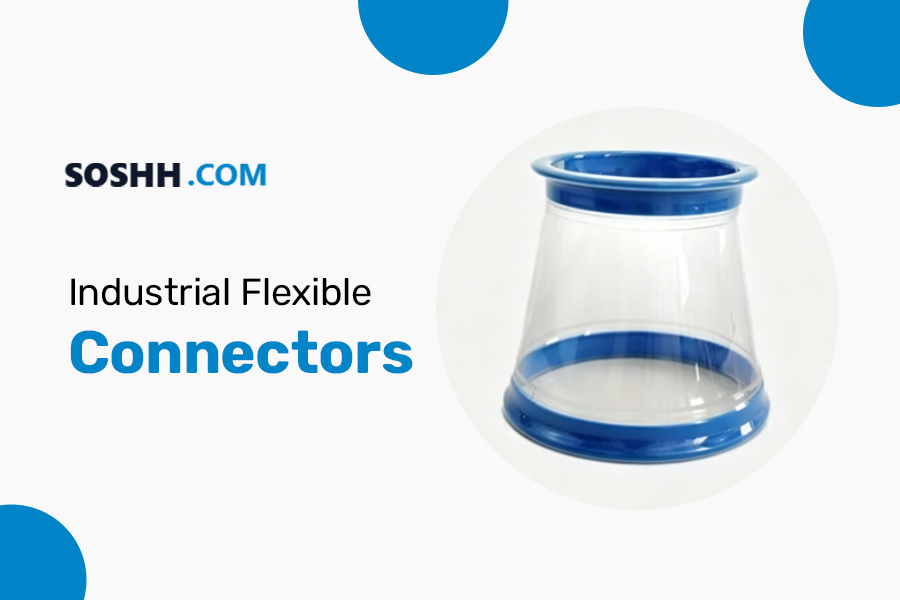
How to Choose Industrial Flexible Connectors for Powder and Bulk Material Handling Systems
When you walk around any plant handling moving powder, you'll notice an issue common to many. Problems rarely occur on the large machinery itself, but at the equipment joins. Whether it's a sifter to hopper, rotary valve to chute or another transfer point, a split sleeve, a loose clamp and a cloud of dust each time the equipment vibrates can waste valuable time and material. Selecting the right connector keeps your connection clean and sealed. Use this guide from SOSHH, a manufacturer of flexible connectors for powder and bulk processing, to confidently select the right connector.
What Are Industrial Flexible Connectors?
Industrial flexible connectors join two pieces of process equipment while providing connection flexibility. Use them where hard piping could cause cracking, leaks or vibration transfer, such as connecting a vibrating screener to the vessel below. A good connector should prevent leakage, absorb movement, and make it easy to disconnect the equipment for cleaning and maintenance.
Different connector types, materials and end types are available. We develop and make a wide range of connectors for food-grade and industrial applications, including quick clamp, flange, hose clamp and push-fit styles.
You'll find these throughout a powder line. Common locations include vibrating sifters, rotary valves, pneumatic conveyors, hopper outlets, and mixer, screen and packaging transfer points. Because each area has different requirements, it is rare to find one product that works across all joints in the plant.
Why Are Flexible Connectors Important in Powder Handling Systems?
Powders are unforgiving. They leak through the tiniest opening, causing messy build-up. This can cause contamination and waste in food, pharmaceutical and chemical applications. The equipment's vibration means the seal takes a beating with every cycle.
Carefully selected powder-handling flexible connectors eliminate these issues. They seal the connection area, flex to reduce stress, and stop static equipment from absorbing vibration-induced stress. They also speed up changeovers, an important factor for regular product changes.
The cost of getting it wrong can be subtle. An intermittent leak means extra cleaning, a worn sleeve causes unplanned downtime, and a stiff connector can disrupt your weighing systems, resulting in fluctuating readings on your batches. Often the connector will have been causing issues for weeks.
How Do Polyurethane Flexible Connectors Improve Material Handling?
Many products were traditionally fitted with an elasticated rubber, PVC or canvas sleeve. While these are effective flexible solutions, they can deteriorate quickly in areas with highly abrasive powders. Due to the highly flexible nature of polyurethane and its excellent abrasion and tear resistance, polyurethane flexible connectors have become a popular alternative.
Our connectors are constructed from ether-based thermoplastic polyurethane (TPU), with an optional anti-static version. Our polyether TPU is rated at -30 to +110°C continuous; +120°C peak; 85°C CIP. Our connectors have a low wear rate of less than 30mm³ when tested to DIN 53516, compared with NBR and PVC materials, which have much higher values. They can also absorb up to around 10mm of lateral and vertical movement. For the exact size and type you plan to buy, ask us for the matching test documentation.
What Are the Benefits of Flexible Connectors in Bulk Material Handling?
In bulk handling, the benefits show up in the maintenance schedule and floor cleanliness. A properly specified connector gives you a tighter seal, less dust escaping into the room, and fewer product losses at transfer points. It cushions vibration, protecting bearings, frames and downstream weighing equipment.
Smooth interior walls help powder flow through the connector instead of building up inside it, and the transparent walls we offer on some of our TPU sleeves let operators see what is happening without opening anything. Another benefit is speed. Bulk material handling connectors with tool-free fittings, like our SF Internal Clamp Flexible Connector, can be removed and refitted by hand, which shortens cleaning and changeover time.
Weight-sensitive processes benefit too. Our lightweight LightTC quick-clamp connector is designed for lines with precision scales and load cells, where a heavy or stiff connector could affect readings. If your process relies on accurate dosing or batching, that is worth asking about before you settle on a design.
How to Choose the Right Flexible Connector for Industrial Applications
Start with the application, and be honest about the powder. Is it fine or coarse, dry or slightly sticky, abrasive or gentle? Does it carry a static charge? Answers like these shape every other decision. Identify the equipment on both sides of the joint, the shape of each opening, and the diameter. Our standard connectors cover a diameter range of roughly DN50 to DN600, and custom shapes such as square-to-round transitions and eccentric reducers are available when your equipment does not match a standard size.
Finally, think about operating conditions such as temperature, pressure or vacuum, and cleaning method. Our standard rating is -0.4 bar vacuum, with higher vacuum possible when stainless anti-collapse rings are added. If you are comparing several options, we can help you narrow them down. For a deeper look at the materials, our Material Selection Guide is a helpful reference.
Which Factors Affect Connector Durability and Abrasion Resistance?
Connector durability depends on the material used, the thickness and how it is mounted. With harder materials and abrasive powders, a thinner sleeve may wear faster, so a high-duty application usually needs a thicker sleeve. We offer thicknesses from 0.5mm for ultra-flexible applications to 1.5mm or 2.0mm for high-duty vacuum and abrasion. The standard option for transfer is 1.0mm.
Finally, consider replacement. Even a well-chosen connector is a wear part, and having a spare in stock means a worn sleeve costs you minutes, not a stopped line. The service life of our TPU connectors is between 12 and 24 months, although this depends on the type of powder, the cleaning regime and operating conditions. You can use this as a guideline for your own records.
How Can Flexible Connectors Help Control Dust and Material Leakage?
A well-sealed connection ensures effective dust control. If both ends of the connector are properly sealed to the equipment, the powder will not leak out. A tri-clamp or snap-fit connector creates a continuous seal when fitted correctly, and it will not be pulled off during vibration.
By reducing leaks, you keep your employees safe in the workplace. Less dust in the air means a cleaner working environment, with fewer respiratory and housekeeping issues to worry about. If the powder is combustible, you may want to use an anti-static ATEX connector to help reduce static charge build-up at the connection. Always check with your safety team what is required for your process and refer to the correct standards.
What Should You Consider When Selecting an Industrial Flexible Connector Supplier?
Don't forget the product itself. Choose a supplier that can clearly describe the materials they use and supply test reports and compliance documents for the correct grade. They should be able to give you a trial sample. Does the supplier offer bespoke sizing and shapes? How fast can they get quotes and drawings back to you?
We offer a standard size database, custom non-standard transitions and technical support for specifying connectors. You can also read about our flexible connectors for food processing if your line handles food-contact products. Whichever supplier you choose, a clear specification written down before ordering prevents most problems that show up later.
If you're looking to specify your connector type, let us know what equipment you have, the sizes of your components and what they're being used for, so we can suggest the best option for you and provide supporting documentation.
FAQs
What are polyurethane flexible connectors?
Polyurethane flexible connectors are soft sleeves, often made from Thermoplastic Polyurethanes (TPU), used to connect two pieces of equipment. They provide excellent flexibility, abrasion resistance, and sealing at the coupling point whilst also offering vibration dampening..
Why are flexible connectors important in powder handling systems?
The seals stop the fine powders leaking from the joints and dampen the vibrations so that rigid machinery is not put under stress. That in turn reduces the dust, reduces product loss and makes maintenance a lot easier.
Which flexible connectors are suitable for bulk material handling?
The right choice depends on the equipment, the powder, and the cleaning regime. We offer all standard bulk material handling connectors (quick clamp, snap-in, flange, hose clamp), and we can also supply custom shapes when equipment doesn't match a standard size.
How do you choose the right polyurethane flexible connector?
Ensure that your pipe has the right inside diameter, is the right shape, constructed from the right material, has the right temperature rating and compliance rating. Choose the wall thickness depending on how abrasive your material is. Ensure your end fittings are suitable for the amount of cleaning required. Get a certificate from your supplier for your specific product.
Can industrial flexible connectors reduce dust leakage?
Yes. When properly sized and fitted, industrial flexible connectors create a continuous seal at the joint and move with the equipment, which keeps powder from escaping. Correct installation is as important as the connector itself.