





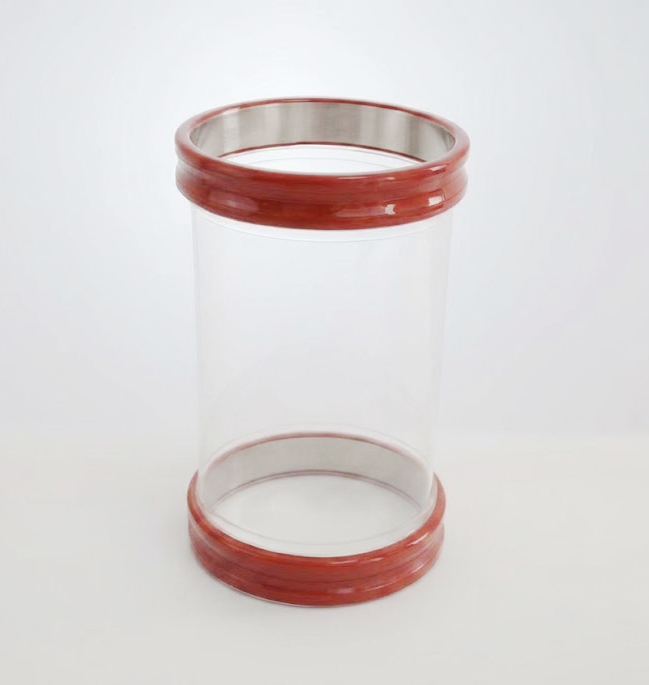
How to Choose Polyurethane Flexible Connectors for Abrasive or CIP Powder Lines
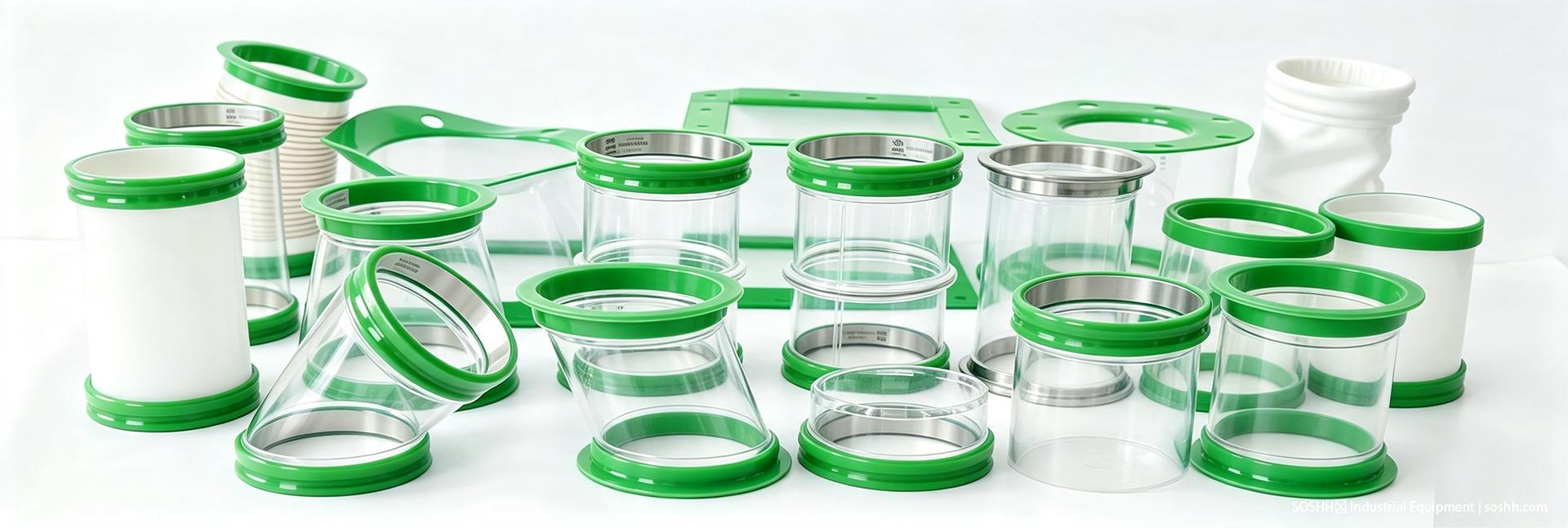
Why Polyurethane (PU) is the Preferred Industrial Connector Material
Polyurethane (especially ether-based PU, commonly known as Seeflex in industry) offers unique physical and chemical properties that allow it to excel in demanding industrial environments.
1. Superior Abrasion and Tear Resistance
• Problem Solved: Traditional rubber or PVC connections rapidly wear down when conveying abrasive materials like sugar, grains, powders, and granules.
• PU Advantage: PU boasts exceptional tear strength and high abrasion resistance, offering a service life significantly longer than traditional materials. This reduces replacement frequency and cuts maintenance expenses.
2. Perfect Flexibility and Vibration Isolation
• Dynamic Application: Equipment like vibrating screens, sifters, and weigh scalesgenerate intense motion and amplitude.
• Functionality: PU Flexible Sleeves effectively absorb and isolate this vibration, preventing stress transfer to the surrounding piping and ensuring stable product flow.
3. Transparency and Hygienic Compliance
• Production Monitoring: Highly transparent PU material allows operators to visually monitor product flow in real-time, check for blockages, or verify cleanliness—a key component of visual management.
• Cleaning Optimization: The smooth surface of PU is easy to clean and often complies with CIP (Clean-in-Place) requirements, minimizing the risk of cross-contamination between batches.
Material Specifications That Determine Service Life
| PROPERTY | SSOT VALUE | WHY IT MATTERS |
|---|---|---|
| Material | 100% virgin polyether TPU | Hydrolysis-resistant, anti-microbial |
| Hardness | 90 Shore A | Stiff enough to seal, flexible enough to flex |
| Tensile strength | 40 MPa | Tear resistance under load |
| Elongation at break | 600% | Absorbs vibration instead of cracking |
| Abrasion | 39.0 mg (DIN) | Wear from abrasive bulk solids |
| Continuous temperature | −20 °C to +110 °C | Cold-weather flexibility vs. CIP heat |
| Peak temperature | +120 °C (short surge) | Transient hot-air exposure |
| Surface resistivity — standard | >10¹² Ω | Insulating grade, general transfer |
| Surface resistivity — anti-static | <10⁹ Ω (AS option) | ATEX dust-zone dissipation |
| Food contact | FDA 21 CFR 177.2600 (Ref: TQT4821B36E) | Direct food contact, repeat use |
Application Selection Matrix
| APPLICATION | PRIMARY REQUIREMENT | RECOMMENDED SOSHH PRODUCT |
|---|---|---|
| Vibrating screens / sifters | Vibration isolation, tear resistance | PU-10 snap-in sleeve (no wire coil needed) |
| Vacuum / pneumatic conveying | Collapse resistance | PU-10-VR vacuum-reinforced sleeve |
| Weighing / loss-in-weight feeders | Zero parasitic force | Ultra-flexible multi-convolution TPU weighing bellows |
| Hoppers / bag feeders | Quick install, dust-tight seal | PU-10 snap-in sleeve |
| Filling heads / cleanrooms | Food-grade, fast CIP | ClearFlex transparent TPU sleeve |
Safety and Compliance: PU Connectors in ATEX Zones
When handling flammable powders like flour, starch, or chemical powders, static electricity is a primary ignition source for dust explosions.
1. The Necessity of Antistatic
- ATEX Regulations: In potentially explosive atmospheres (ATEX Zones), it is mandatory to use dissipative or earthed components to ensure static charge cannot accumulate.
- Solution: Select the antistatic (AS) grade of polyurethane flexible connector. The dissipative polymer itself carries the charge to the grounded stainless-steel spigot — no external wires or lugs are added, keeping the bore smooth and metal-detector-safe.This ensures a safe release of static electricity to the grounded spigot system.
2. Food & Pharma Certifications
The chosen PU material must meet global standards for product contact:
- FDA 21 CFR 177.2600 (US Food and Drug Administration) compliance.
- EU Regulation 10/2011 (European Food Contact Materials) compliance.
Discarding the Hose Clamp: The Snap-In Revolution
The revolutionary PU fitting system exemplifies the next generation of industrial flexible connection technology.
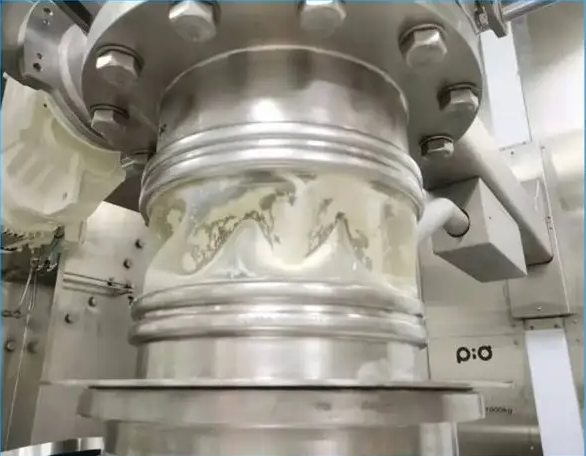
Snap-In vs. Hose Clamp — Why Plants Switch
| Comparison Feature | Traditional Hose Clamp Connection | Snap-In PU Connector |
|---|---|---|
| Sealing Integrity | Prone to leaks, creates dust clouds | 100% Dust Tight Seal, seals tighter under pressure |
| Installation Time | Requires tools, takes 5–10 minutes | Tool-Free Snap-Fit, takes less than 30 seconds |
| Hygiene | Clamps and crevices trap product, risk of contamination | Smooth interior, easy to clean and inspect |
| Reliability | Easily loosens or moves due to vibration | Secure locking mechanism, completely vibration resistant |
Time to Upgrade Your Flexible Connector Strategy
The Polyurethane Flexible Connector is more than just a coupling; it is a critical investment that directly impacts your plant’s OEE (Overall Equipment Effectiveness), worker safety, and product quality compliance.
Evaluate your current connection points today and transition from outdated hose clamp systems to a high-reliability, hygienic Polyurethane Flexible Connection Solution.
Would you like detailed specifications for specific models of PU Flexible Connectors to assist with your procurement assessment?
FAQ
Q: Polyether or polyester TPU for food/pharma?
A: Polyether — it is hydrolysis-resistant and anti-microbial; polyester degrades under hot CIP moisture.
Q: Do I need grounding wires on an anti-static sleeve?
A: No. The AS grade dissipates charge through the polymer itself (<10⁹ Ω). External wires or lugs are not required and would compromise the smooth, metal-detector-safe bore.
Q: What temperature can TPU handle?
A: −20 °C to +110 °C continuous, +120 °C short surge. Above that, switch to CNC-machined pure PTFE (−70 °C to +260 °C).
Q: Is the sleeve metal-detector safe?
A: Yes — the standard PU sleeve contains no metal, so it will not trigger inline metal detectors.