


Polyether vs. Polyester TPU: Which TPU Material Is Better for Food, Pharma, and Powder Handling Applications?
Polyether TPU Is the Standard Choice for Hygienic Applications
When selecting TPU for food, pharmaceutical, and powder handling equipment, the key difference between polyether TPU and polyester TPU is not strength — it is long-term chemical stability in real operating environments.
Polyether TPU is recommended for applications involving moisture, humidity, CIP cleaning, steam exposure, or sanitary processing because its ether-based molecular structure provides superior hydrolysis resistance.
Polyester TPU can provide excellent dry abrasion resistance and mechanical strength, but it should mainly be considered for dry bulk handling applications where moisture exposure is limited.
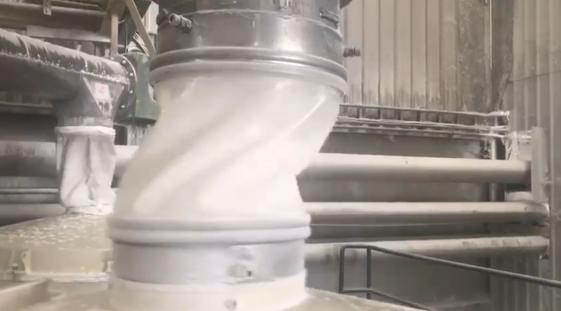
For most food-grade flexible connectors, powder transfer sleeves, vibrating screen connectors, and pharmaceutical handling equipment, polyether TPU is the safer engineering choice.
Quick Material Selection Matrix
| Application Condition | Preferred Starting Point | Engineering Consideration |
|---|---|---|
| Food and pharmaceutical powder with humidity exposure | Polyether TPU | Verify food-contact requirements and moisture resistance |
| Wet washdown or CIP cleaning | Polyether TPU | Confirm compatibility with the cleaning chemicals, concentration, and cycle |
| High-frequency vibrating sanitary equipment | Polyether TPU | Verify flex-fatigue performance and connector geometry |
| Dry, abrasive mineral powder | Polyester TPU may be considered | Qualify abrasion performance and confirm moisture exposure is limited |
| Food-contact applications | Application-qualified TPU grade | Verify documentation for the specific material and finished article |
1. Polyether TPU vs Polyester TPU: What Is the Difference?
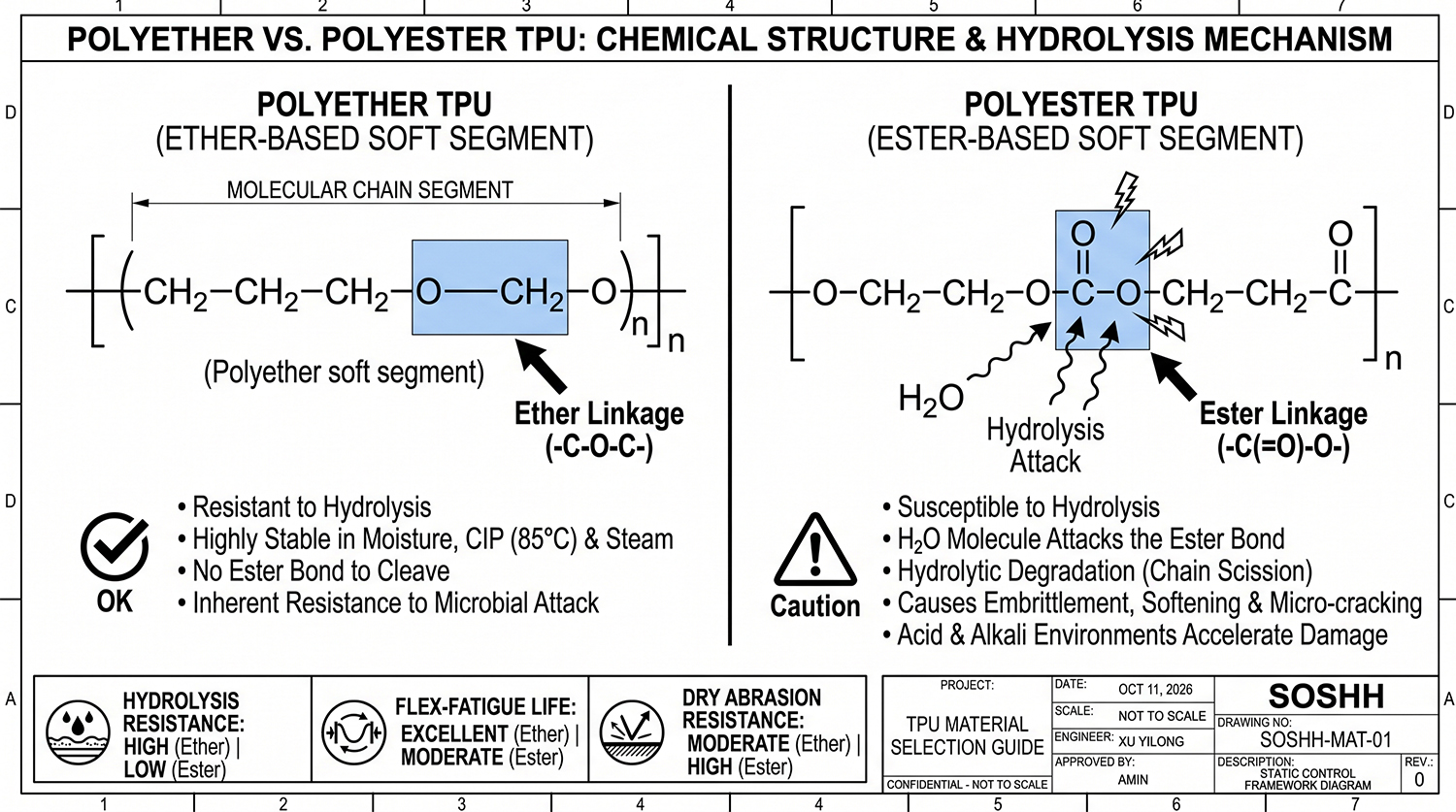
Molecular soft-segment and hydrolysis mechanism comparison between Polyether and Polyester TPU. The ether linkage (-C-O-C-) ensures intrinsic resistance to moisture and cleaning chemicals (CIP), whereas the ester group (-C(=O)-O-) is vulnerable to water molecule attack and hydrolytic chain scission.
TPU (Thermoplastic Polyurethane) consists of soft segments and hard segments. The soft segment chemistry determines how the material behaves when exposed to water, humidity, chemicals, and temperature cycling.
The two main TPU families are:
Polyether TPU
Polyether TPU uses ether-based soft segments.
Main advantages:
- Excellent hydrolysis resistance
- Better performance in humid environments
- Higher resistance to microbial degradation
- Suitable for repeated CIP cleaning
- Maintains flexibility at low temperatures
Typical applications:
- Food powder conveying
- Pharmaceutical processing
- Fermentation equipment
- Flour and starch handling
- Sanitary flexible connectors
Polyester TPU
Polyester TPU uses ester-based soft segments.
Main advantages:
- High tensile strength
- Good dry abrasion resistance
- Strong mechanical performance in dry conditions
Typical applications:
- Dry mineral powder handling
- Abrasive material transfer
- Industrial applications without humidity exposure
2. Why Hydrolysis Resistance Matters in Food and Pharmaceutical Plants

Many TPU failures are not caused by mechanical overload.
They are caused by long-term moisture exposure.
Hydrolysis occurs when water attacks susceptible chemical bonds inside the polymer structure.
Polyester TPU contains ester bonds that can gradually degrade when exposed to:
- Warm humidity
- Steam
- Alkaline cleaning agents
- Repeated CIP cycles
Possible failure modes include:
- Yellowing
- Loss of transparency
- Surface cracking
- Reduced elongation
- Premature fatigue failure
Polyether TPU contains ether linkages that provide much higher resistance against hydrolysis.
This allows polyether TPU components to maintain performance in:
- Humid powder environments
- Food production rooms
- Pharmaceutical clean areas
- Frequent wash-down systems
3. Polyether TPU Temperature Range and CIP Performance
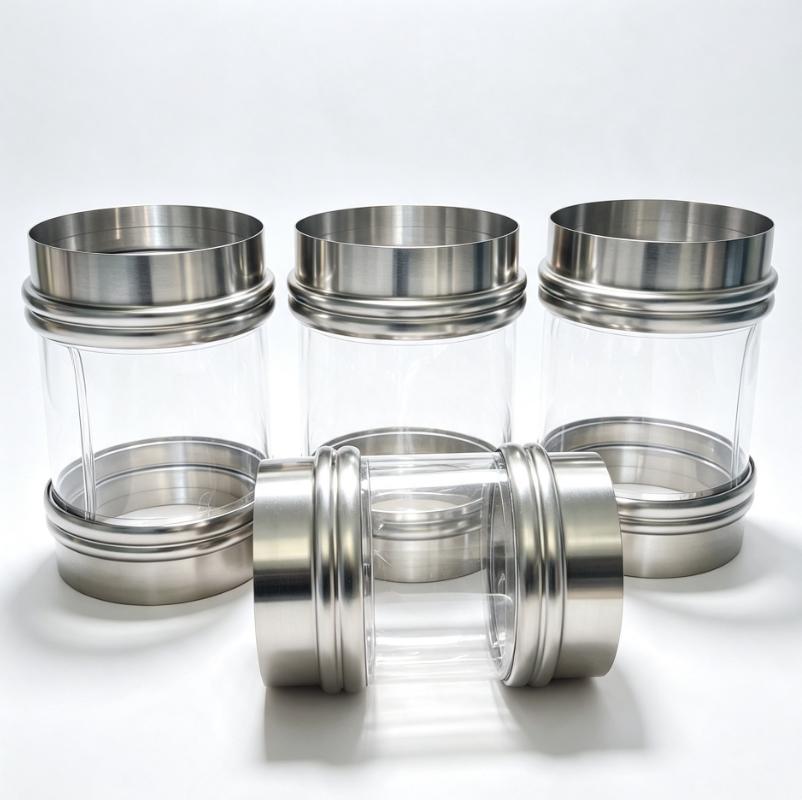
For industrial food and powder handling applications, operating temperature is a critical selection factor.
SOSHH polyether TPU performance range:
- Continuous operating temperature: -30 to +110 deg C
- Short-term peak temperature: up to +120 deg C
- CIP cleaning temperature: up to 85 deg C
CIP Compatibility Note:The 85°C CIP rating is a stated operating limit, not a guarantee of compatibility with every cleaning process. Confirm the specific TPU grade against the cleaning agent, concentration, contact time, rinse procedure, and mechanical conditions. Short-term exposure to +120°C must not be interpreted as permission for continuous operation above +110°C.
This temperature capability makes polyether TPU suitable for:
- Food ingredient processing
- Fermentation systems
- Powder mixers
- Vibrating sifters
- Pharmaceutical powder transfer
4. Polyether TPU vs Polyester TPU Comparison Table
Polyether TPU vs Polyester TPU: Engineering Comparison
| Property | Polyether TPU | Polyester TPU |
|---|---|---|
| Soft-segment chemistry | Ether-based | Ester-based |
| Hydrolysis resistance | Generally superior | Requires greater attention to hydrolysis exposure |
| Humid environments | Preferred starting point | Application-specific qualification required |
| CIP cleaning | Suitable only within validated material and cleaning limits | Requires specific validation; generally not the first choice |
| Dry abrasion resistance | Grade dependent | Can be advantageous in selected applications |
| Flex-fatigue performance | Depends on formulation and connector design | Depends on formulation and connector design |
| Food and pharmaceutical powder handling | Preferred baseline for humid or frequently cleaned service | Consider mainly for qualified dry-service applications |
5. How Engineers Should Select TPU Material
Before specifying TPU, evaluate five engineering factors.
1. Does the application involve moisture?
If the process contains:
- Water
- Humidity
- Condensation
- Wet cleaning
Choose:
Polyether TPU
2. Is CIP cleaning required?
For equipment cleaned by:
- Caustic washing
- Sanitizing solutions
- Hot water circulation
Polyether TPU should be selected.
3. Is the material completely dry?
For dry powder applications such as:
- Minerals
- Sand
- Dry abrasive powders
Polyester TPU may be considered if hydrolysis risk is absent.
4. What is the flex fatigue requirement?
High-frequency applications such as:
- Vibrating sifters
- Expansion connectors
- Flexible sleeves
require:
- High elongation
- Good fatigue resistance
Polyether TPU provides stable long-term flexibility.
5. Is food-contact compliance required?
Food-contact approval and cleaning durability are different requirements.
A material may comply with migration testing but still fail after repeated chemical cleaning.
Always verify:
- Food contact compliance
- Chemical resistance
- Temperature capability
- Mechanical fatigue performance
6. Food Grade TPU Certification and Compliance
For food and pharmaceutical applications, engineers should not rely only on generic “food grade TPU” statements.
The complete finished article should be evaluated according to applicable requirements, including:
- FDA 21 CFR 177.2600
- GB 4806.7-2023
SOSHH recommends verifying:
- Resin formulation
- Finished product testing
- Migration reports
- Application conditions
Independent verification reference:TQT4821B36E
Compliance Verification:Food-contact compliance must be assessed against the applicable regulation, material formulation, intended food type, and contact conditions. FDA 21 CFR 177.2600 specifically addresses rubber articles intended for repeated use; it should not be presented as blanket approval for every TPU formulation or finished connector. Before procurement, verify the scope of the applicable declaration and test report for the exact material and finished article. Food-contact compliance and CIP chemical durability must be evaluated separately.
Final Engineering Recommendation
For food processing, pharmaceutical powder handling, fermentation, and humid production environments:
Choose polyether TPU.
It provides the best combination of:
- Hydrolysis resistance
- CIP durability
- Temperature stability
- Flex fatigue performance
- Hygienic application reliability
For dry and highly abrasive bulk handling systems:
Polyester TPU may be suitable after application review.
The correct TPU selection depends not only on abrasion resistance, but also on moisture exposure, cleaning procedures, temperature cycles, and regulatory requirements.
Frequently Asked Questions
Q1: Is polyether TPU better than polyester TPU for food processing?
Polyether TPU is generally preferred for humid food-processing and pharmaceutical powder applications because of its superior hydrolysis resistance. The final choice must also account for cleaning conditions, mechanical duty, and applicable food-contact requirements.
Q2: Can polyester TPU be used for powder handling?
Yes. Polyester TPU may be suitable for selected dry, abrasive applications where moisture and wet cleaning exposure are limited and the material has been qualified for the operating conditions.
Q3: What is the continuous temperature range of SOSHH polyether TPU?
The stated range is -30 to +110°C continuous, with short-term peak exposure up to +120°C. CIP cleaning is rated up to 85°C under the applicable validated conditions.
Q4: Does food-contact compliance guarantee CIP resistance?
No. Food-contact compliance and chemical-cleaning durability are separate requirements. Verify both regulatory documentation and compatibility with the actual cleaning process.
Q5: How can I select the right TPU flexible connector for my equipment?
Send SOSHH your equipment photos, connector dimensions, powder type, operating temperature, cleaning method, and movement conditions. The engineering team can review the application and recommend a suitable material and connector design.
Need Help Selecting the Right Flexible Connector?
Choosing the correct powder flexible connector is not just about matching a diameter or a material name. Performance depends on the full application envelope — powder characteristics, connection geometry, operating temperature, pressure or vacuum, vibration frequency, cleaning method, and static-control requirements.
If you are not certain whether your current connector design is the right one, the SOSHH engineering team can review the application for you.
Simply send us these five items:
- Equipment photos and existing connector photos (front view + side view)
- Spigot dimensions at both ends and the installed gap
- Operating conditions — temperature, pressure/vacuum, and vibration
- Powder type and particle characteristics
- Cleaning method and any food or pharmaceutical compliance requirements
What you get back:
- ✓ Technical material and grade selection
- ✓ Connector structure recommendation
- ✓ Customized drawing support
- ✓ Prototype and sample development
- ✓ Fast engineering response for urgent projects
For qualified projects, SOSHH supports the full fast-track path:
Same-day technical review → Same-day drawing preparation → Same-day sample shipment
Submit Your Application Details → Email: amin@soshh.com