


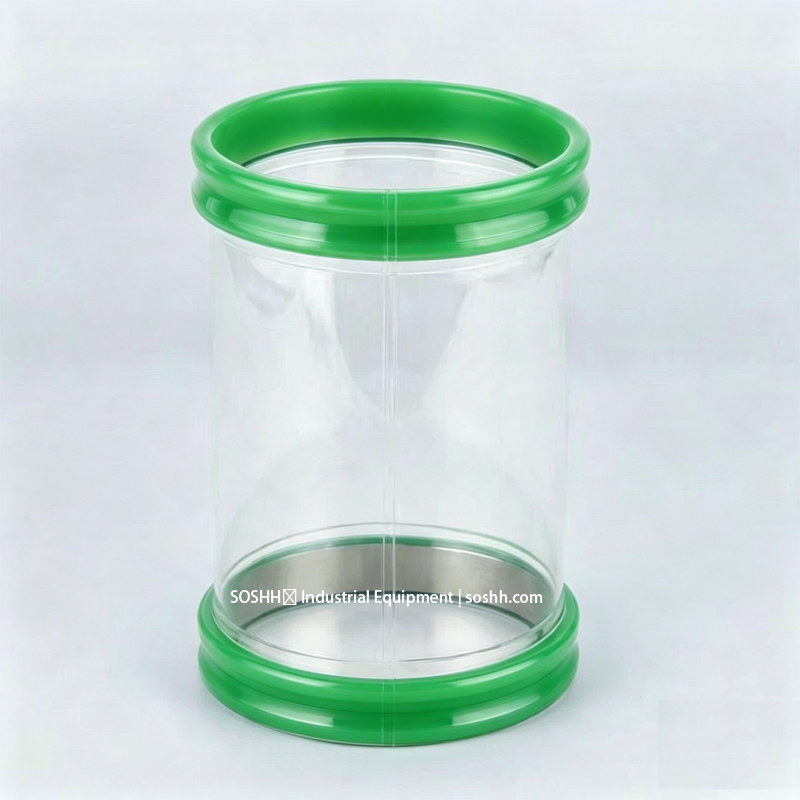
Why Vibrating Sifter Flexible Connectors Fail: TPU Material Selection, Fatigue Analysis, and Engineering Solutions
A vibrating sifter flexible connector is a dynamic fatigue component, not a static joint. It must absorb repeated bending, tension-compression, and vacuum pulsing while holding a seal. Premature failure is usually caused by wrong TPU grade, excessive vibration, poor geometry, or improper installation — not diameter alone. Correct sizing requires measuring the full movement envelope and matching a polyether TPU grade rated −30 to +110 °C continuous, +120 °C short-term peak, 85 °C CIP.
READ MORE...
How to Specify a Vacuum-Rated Flexible Connector: Collapse Pressure, Reinforcement & Validation
A flexible connector operating under negative pressure is a structural stability problem before it is a material-selection problem. Atmospheric pressure pushes inward on the sleeve, and an unsupported wall can buckle long before the conveying system reaches full vacuum. This guide quantifies the diameter-dependent collapse threshold, compares four anti-collapse reinforcement architectures, and provides the engineering rules for vacuum specification, metal-detector constraints, static control, temperature derating, ISO 7233 qualification, and total cost of a collapse incident. Specify vacuum as a differential-pressure requirement and qualify the complete connector at the actual diameter, temperature, movement and reinforcement configuration. Do not infer vacuum capability from TPU tensile strength, wall thickness, or nominal pipe size alone.
READ MORE...