


Why Vibrating Sifter Flexible Connectors Fail: TPU Material Selection, Fatigue Analysis, and Engineering Solutions
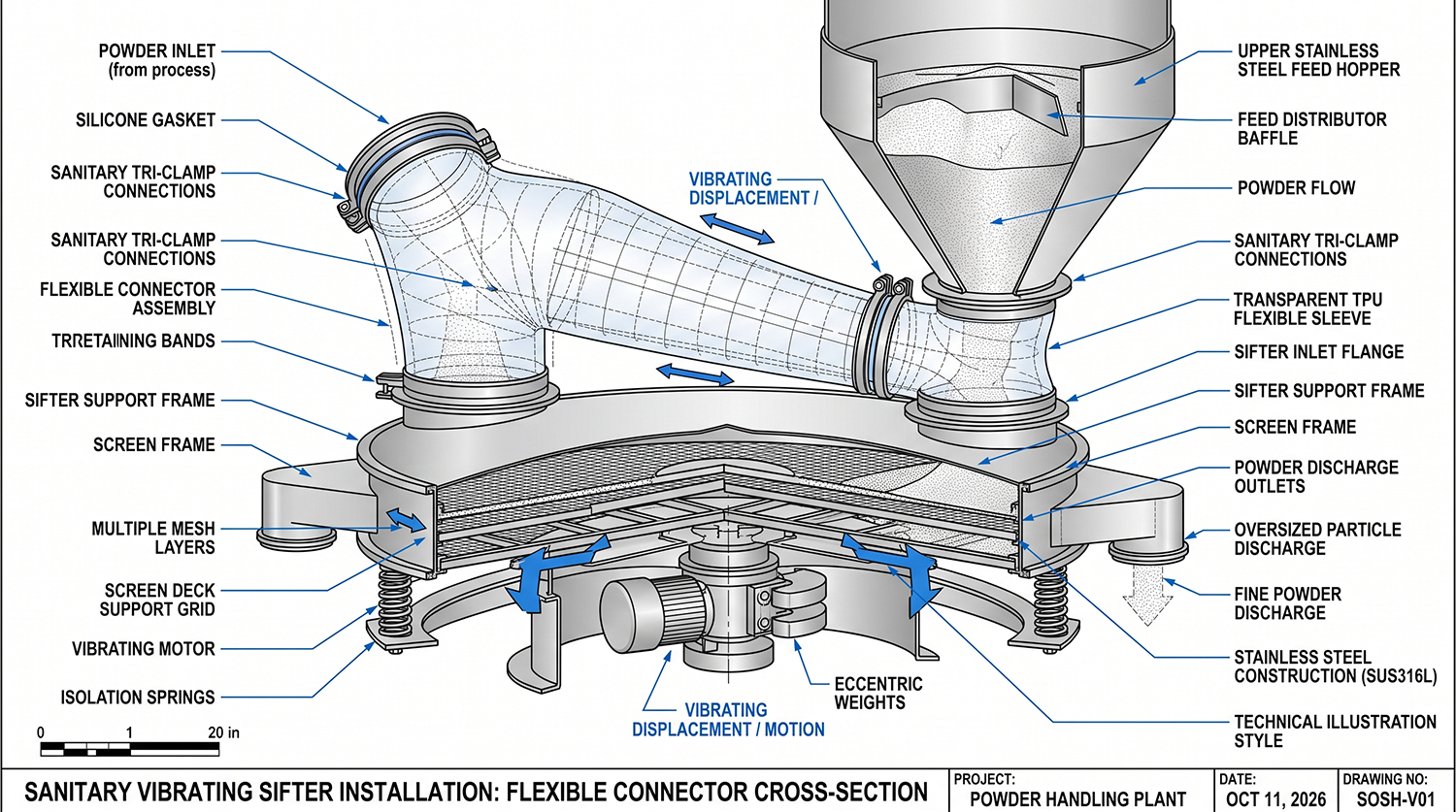
Figure 1: Sanitary polyether TPU flexible connector installed between stainless steel feed hopper and circular vibrating sifter deck.
Flexible connectors installed on vibrating sifters are dynamic components, not static joints.
Unlike fixed piping connections, vibrating equipment creates continuous mechanical movement including bending, tension, compression, and vacuum pulsation. The connector must absorb these repeated movements while maintaining sealing performance and structural integrity.
Premature flexible connector failure is usually caused by:
- Incorrect TPU material selection
- Excessive vibration loading
- Poor connector geometry
- Improper installation
- Incompatible cleaning conditions
Connector diameter alone does not determine service life.
The correct engineering approach is to measure the complete movement envelope and select a TPU grade and connector structure based on the actual operating conditions.
For sanitary vibrating applications, polyether TPU is usually the preferred starting material because it provides excellent hydrolysis resistance, flexibility, and fatigue performance.
| Parameter | Typical Performance |
|---|---|
| Continuous operating temperature | -30 to +110 °C |
| Short-term peak temperature | +120 °C |
| CIP cleaning capability | Up to 85 °C |
Note: +120 °C is a short-term temperature peak only and does not allow continuous operation above +110 °C.
Common Failure Causes of Vibrating Flexible Connectors
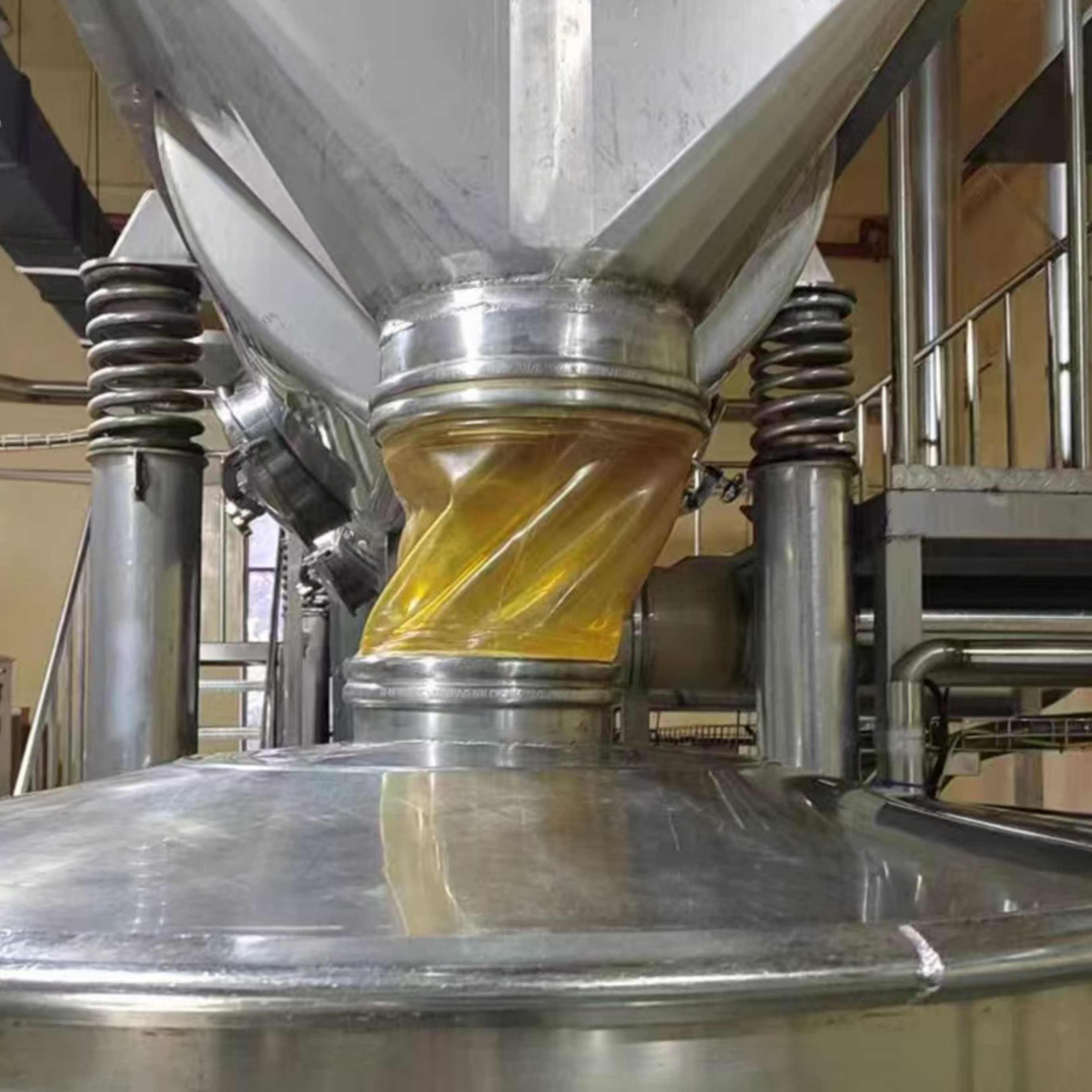
Vibrating sifters create repeated stress cycles at the flexible section, cuff area, and welded transitions.
A connector that is not correctly selected may experience premature cracking, tearing, or loss of sealing performance.
| Failure Cause | Engineering Problem |
|---|---|
| Incorrect TPU grade | Poor fatigue resistance or chemical compatibility |
| Excessive vibration | Accelerated material fatigue |
| Wrong connector geometry | Stress concentration at cuffs and weld areas |
| Improper installation | Uneven mechanical loading |
| Incorrect cleaning compatibility | TPU degradation over time |
A high-quality flexible connector must be designed around the complete application, not only the connection diameter.
Why Vibrating Sifter Connectors Fail
| Failure Symptom | Root Cause | Engineering Solution |
|---|---|---|
| Tear at cuff edge | Clamp stress concentration | Reinforced cuff design |
| Cracking after months | Incorrect TPU grade | Polyether TPU selection |
| Powder leakage | Incorrect length or tension | Measure movement envelope |
| Static discharge risk | Insulating material | Static dissipative TPU |
| Collapse under vacuum | No reinforcement | Vacuum-rated structure |
Key Selection Parameters for Vibrating Sifter Connectors
Before selecting a flexible connector, engineers should evaluate the following operating parameters:
| Parameter | Engineering Requirement |
|---|---|
| Vibration frequency and amplitude | Determines fatigue resistance and flexibility requirement |
| Powder temperature | Determines TPU grade selection |
| Pressure and vacuum conditions | Determines wall thickness and reinforcement design |
| Cleaning method | Determines chemical resistance and temperature capability |
| Installation space | Determines connector length and movement allowance |
| Compliance requirements | Food contact, pharmaceutical, static control, ATEX requirements |
A correct specification combines mechanical performance, material compatibility, and regulatory requirements.
TPU Material Selection for Vibrating Powder Applications
Different TPU formulations provide different advantages.
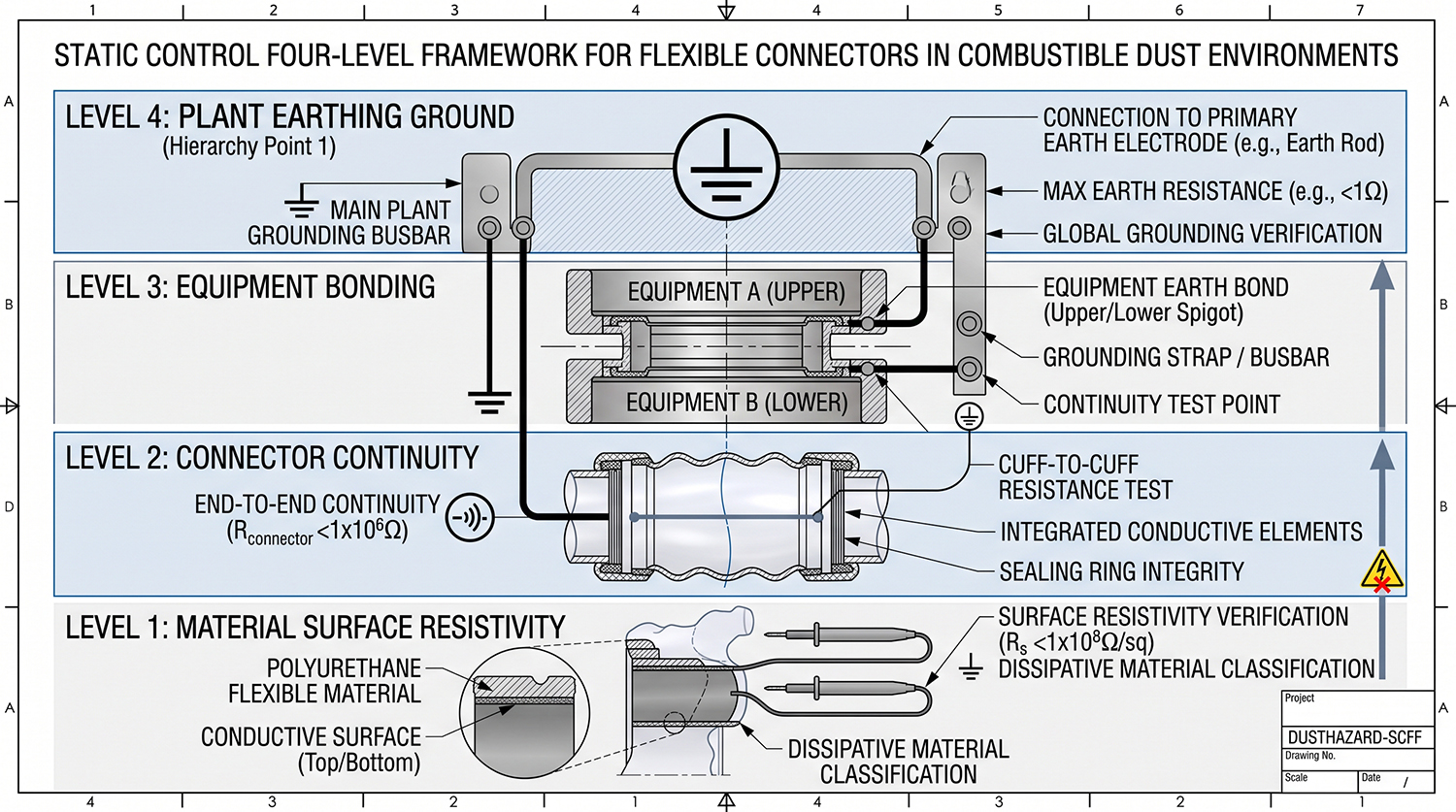
Figure 4: Four-level static electricity mitigation framework for combustible powder handling in ATEX/NFPA zones.
| TPU Type | Main Advantage | Typical Application |
|---|---|---|
| Polyether TPU | Hydrolysis resistance, flexibility, long fatigue life | Food, pharmaceutical, humid powder, CIP applications |
| Polyester TPU | Higher dry abrasion resistance | Dry abrasive powder applications without wet cleaning |
| Static dissipative TPU | Electrostatic charge control | Combustible powder handling environments |
For vibrating sanitary applications, polyether TPU is the preferred engineering choice because it maintains elasticity during:
- Continuous vibration
- Humidity exposure
- Repeated cleaning cycles
- Temperature changes
TPU Selection Matrix for Vibrating Sifters
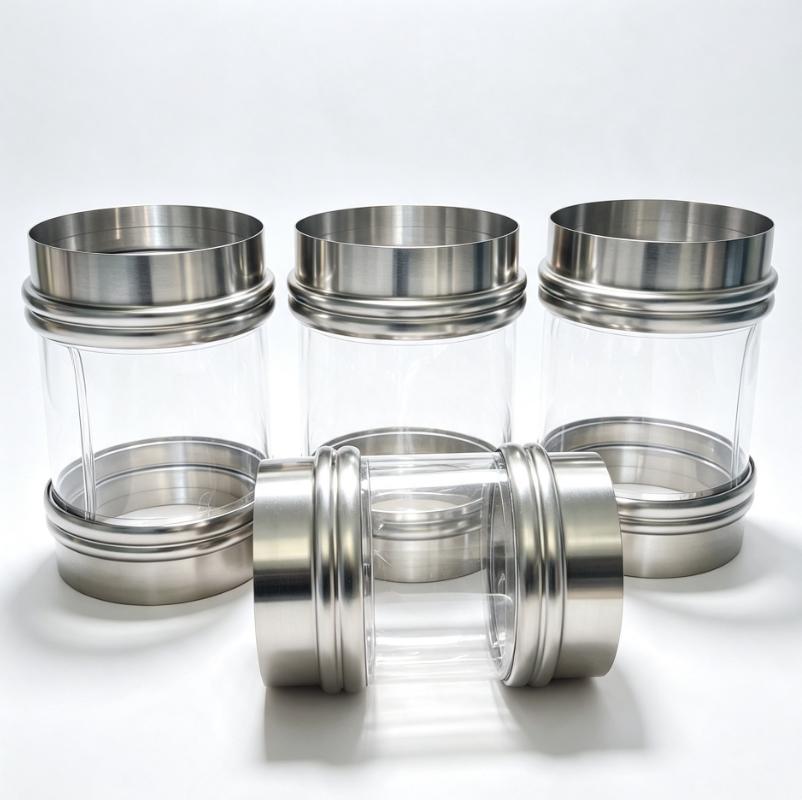
| Application | Recommended TPU | Reason |
|---|---|---|
| Food powder | Polyether TPU | Hydrolysis resistance |
| Pharmaceutical powder | Polyether TPU | Hygienic + CIP compatibility |
| Combustible dust | PU-10-AS | Static dissipation |
| Abrasive powder | PU-15 | Higher abrasion resistance |
| High temperature | PUHT | Temperature capability |
Design Features That Extend Connector Service Life
Connector geometry directly affects fatigue performance.
The flexible section must absorb movement without creating excessive stress concentration.
| Design Feature | Engineering Benefit |
|---|---|
| Smooth transition geometry | Reduces stress concentration |
| Reinforced cuff area | Improves installation strength |
| Correct wall thickness | Balances flexibility and tear resistance |
| Correct connector length | Prevents excessive stretching and folding |
Connector length is especially critical.
A connector that is too short operates under constant tension during every vibration cycle.
A connector that is too long may fold excessively, create unstable movement, and increase powder accumulation.
The correct design should consider the full movement envelope:
| Movement Condition | Design Consideration |
|---|---|
| Neutral position | Initial installation condition |
| Maximum extension | Prevent excessive tensile stress |
| Maximum compression | Prevent uncontrolled folding |
| Maximum lateral movement | Maintain sealing and flexibility |
Common Installation Mistakes That Reduce Service Life
Many connector failures are caused by installation conditions rather than material defects.
| Installation Mistake | Result |
|---|---|
| Connector installed under tension | Accelerated fatigue cracking |
| Incorrect face-to-face measurement | Excessive stretching |
| Over-tightened clamps | Cuff damage |
| No vibration allowance | Premature failure |
| Incorrect alignment | Uneven loading |
A flexible connector should be installed in a neutral condition whenever possible, allowing the designed flexible section to absorb movement.
Engineering Case Study: Vibrating Sifter Connector Upgrade
A powder processing customer experienced repeated flexible connector replacement on a vibrating sifter.
The original connector was selected mainly by diameter without considering vibration movement, fatigue loading, or cleaning requirements.
| Previous Condition | Engineering Improvement |
|---|---|
| Standard TPU material | Application-specific polyether TPU |
| High cuff fatigue stress | Reinforced cuff design and smoother transition |
| Incorrect movement allowance | Connector geometry matched to actual movement envelope |
| Short replacement cycle | Improved fatigue resistance |
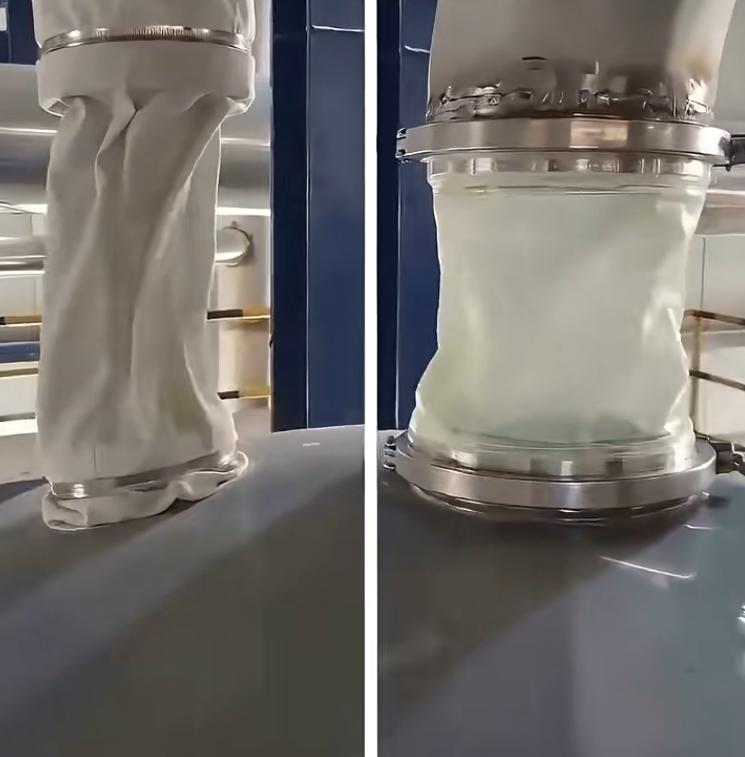
Figure 5: Engineering upgrade comparison: transition from failure-prone hose-clamped sleeve to hygienic snap-in polyether TPU connector.
Result:
The upgraded flexible connector provided improved fatigue resistance, stable operation under continuous vibration, and longer service reliability.
Frequently Asked Questions
| Question | Answer |
|---|---|
| Why do vibrating sifter connectors fail quickly? | The main causes are fatigue, incorrect TPU selection, poor geometry, or improper installation rather than diameter alone. |
| Is thicker TPU always better? | No. Excessive thickness can reduce flexibility and increase stress concentration. |
| What TPU is best for vibrating food equipment? | Polyether TPU is commonly preferred for humid, sanitary, and CIP-cleaned applications. |
| How long should a vibrating connector last? | Service life depends on movement, installation, material grade, cleaning conditions, and operating environment. |
| Can SOSHH customize vibrating flexible connectors? | Yes. Dimensions, TPU grade, wall thickness, reinforcement, and structure can be customized. |
Engineering Support from SOSHH
Flexible connector failure on vibrating equipment is rarely solved by simply changing diameter.
The correct solution requires evaluation of:
- Equipment movement
- Powder characteristics
- Temperature
- Cleaning process
- Installation dimensions
- Compliance requirements
Send SOSHH your application information:
Required Information
- Equipment and existing connector photos (front and side view)
- Spigot dimensions and installed face-to-face gap
- Vibration frequency and movement amplitude
- Powder type and operating temperature
- Cleaning method and compliance requirements
What SOSHH Provides
✓ Technical TPU material selection
✓ Connector structure recommendation
✓ Customized engineering drawings
✓ Prototype and sample development
✓ Fast technical response for urgent projects
For qualified projects: Same-day technical review → Same-day drawing preparation → Same-day sample shipment
Submit Your Application Details
Email: amin@soshh.com