





Do You Need Gaskets for Powder Sleeves? Tool-Free Seal Explained
Most powder handling connectors leak at the gasket — either the gasket misaligns during clamping, degrades under CIP chemicals, or pinches at the flange edge. The tool-free snap-in flexible connector removes this failure point entirely. This guide explains when you can run without a gasket, and the few cases where a gasket or face seal is still the correct specification.
The Short Answer
No. A correctly specified snap-in flexible connector seals dust-tight by controlled tension — no flat gasket, no clamp band, and no silicone sealant. The connector body itself forms the engineered seal. You only need a separate gasket or face seal in specific cases: high-temperature PTFE flanges, aggressive chemical service, or rigid metal-to-metal transitions.
Why Traditional Clamped Connectors Leak at the Gasket
Conventional clamped connectors rely on a flat elastomeric gasket squeezed between two metal flanges. That design fails in three predictable ways:
- Misalignment: The gasket shifts during bolt torquing or clamp tightening, creating an unseen leak path for micro-fine powders.
- Chemical Degradation: CIP detergents, hot water, and sanitizers swell or embrittle flat gasket materials over time, causing seal relaxation.
- Pinch Failure: High-frequency vibration causes mechanical shear at the pinch point where the rigid clamp edge meets the flexible sleeve, resulting in edge tearing.
Every one of these is a gasket-specific failure mode. By removing the separate gasket, you remove the leak path entirely.
How the Tool-Free Snap-In Seal Works
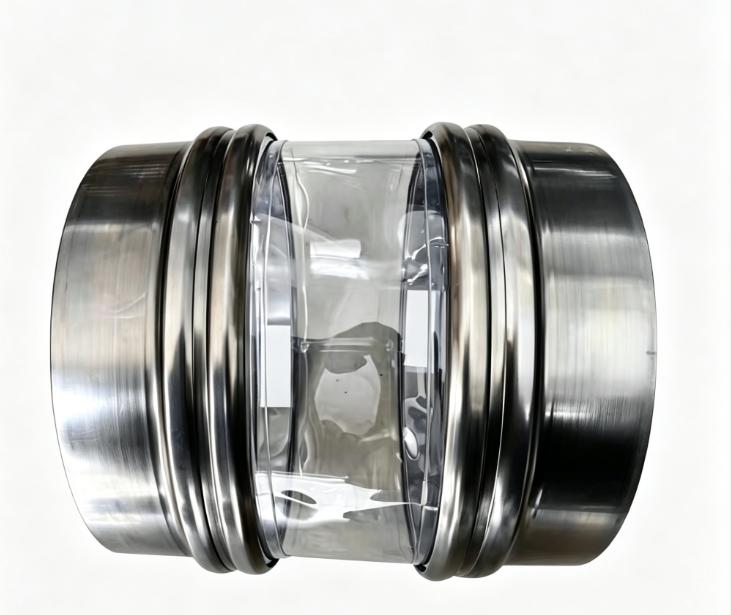
The snap-in system replaces the compressed gasket with an outward radial tension seal:
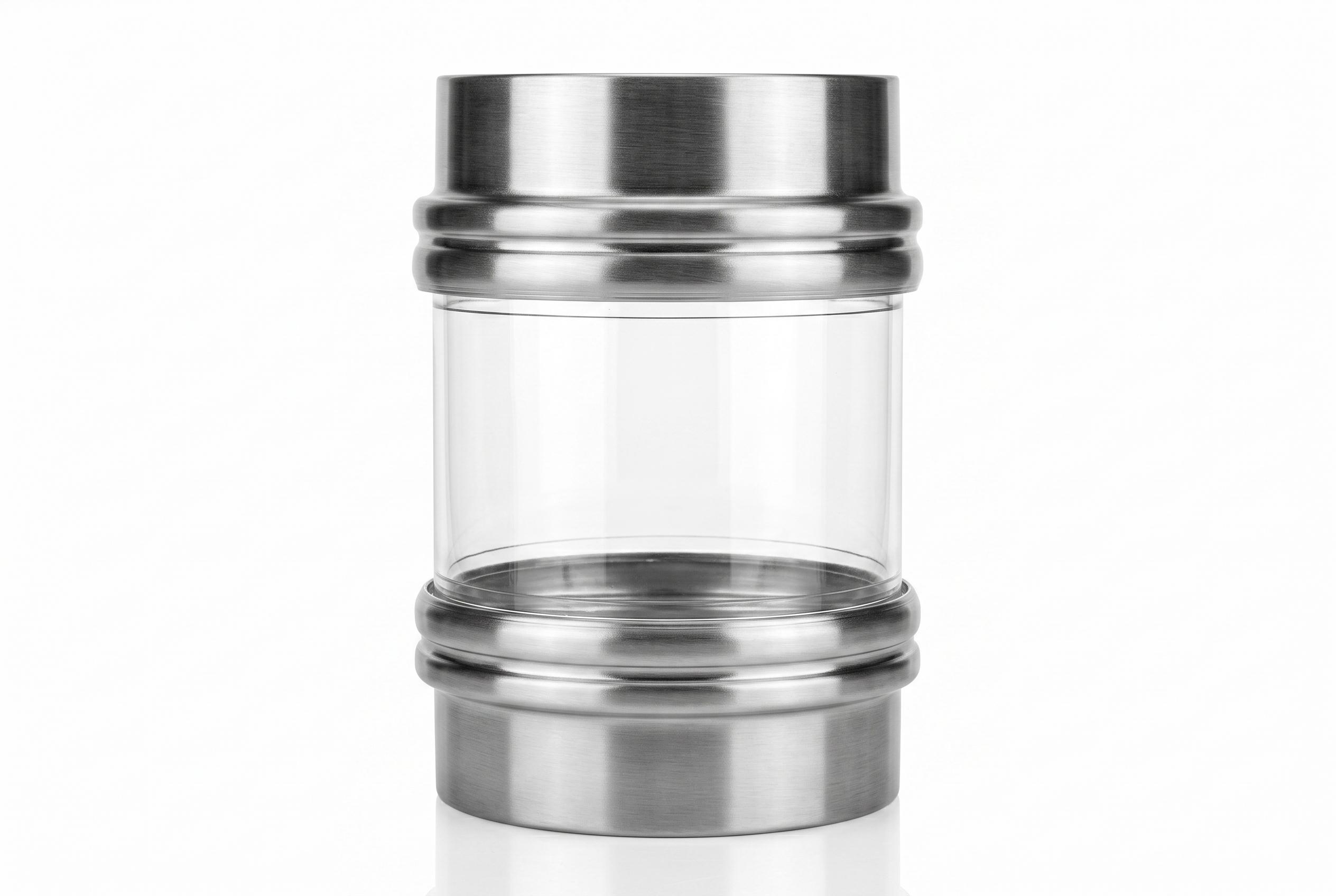
- Precision Spigot Channels: The rigid stainless steel spigots feature precision-rolled grooves.
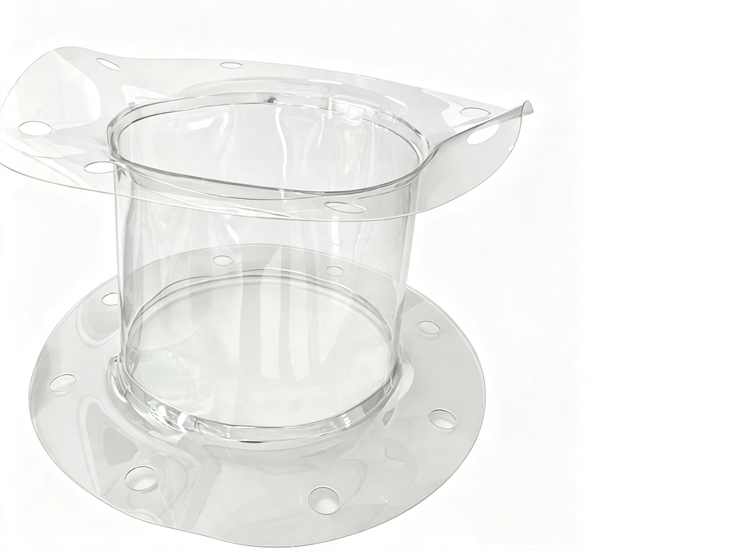
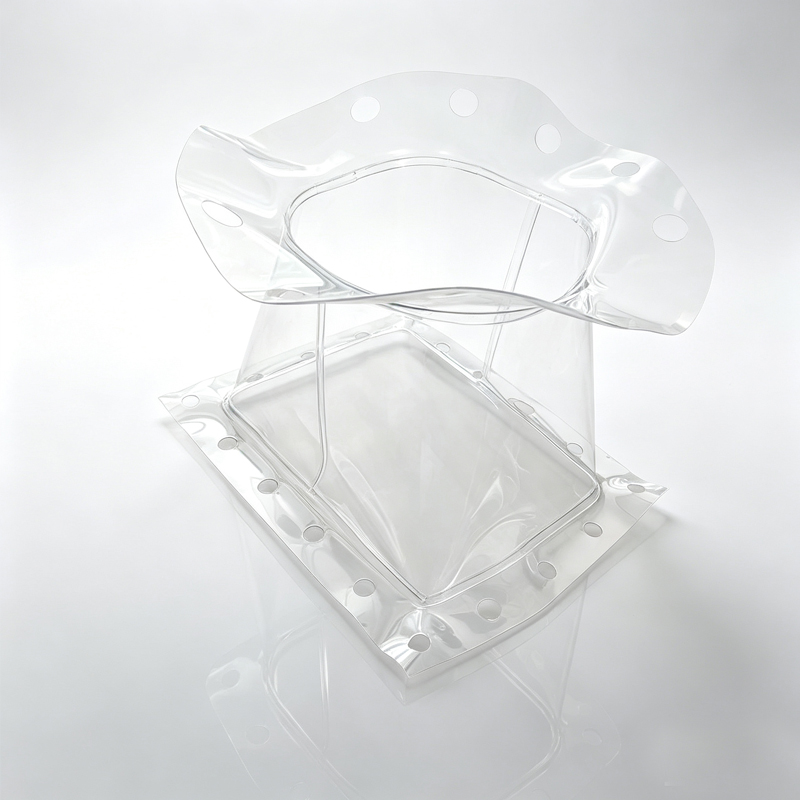
- Encapsulated Snap-Bands: The flexible connector features high-frequency welded cuffs containing internal polymer snap-bands.
- Tension Lock: When snapped into the spigot groove, the band exerts continuous 360-degree outward tension, creating a 100% dust-tight containment seal that prevents fluid-like powders from escaping even under operating pressures up to +0.35 bar.
For step-by-step changeover mechanics, see our engineering guide: .Quick-Clamp TPU Connectors: 30-Second Dust-Tight Changeover.
When You Still Need a Gasket or Face Seal
The gasket-free protocol applies to standard polyether TPU sleeves on vibrating sifters, feeders, and gravity drops. However, three operating conditions still require an engineered gasket or face seal:
- 1. High-Temperature PTFE Service (>150 °C): Above the continuous operating limit of TPU (+110 °C), CNC-machined virgin PTFE bellows must be specified. These connect to pipeline flanges using a flat PTFE face seal rather than an internal snap-band. See CNC Machined PTFE Bellows: 260 °C High-Temperature & Chemical Resistance.
- 2. Aggressive Chemical Exposure: Strong acids, caustic CIP concentrations, and aggressive organic solvents demand virgin PTFE, where an engineered flat face seal is part of the assembly.
- 3. Rigid Metal-to-Metal Flange Interfaces: Where rigid spool pieces meet without an elastomeric connector, a sanitary flat gasket is mechanically required.
Food-Contact Hygiene & Cleanability
Because snap-in connectors have no separate flat gaskets, clamps, or crevices, they eliminate the primary harborage point for microbial growth and powder cross-contamination.
- FDA Compliance: Manufactured from virgin polyether TPU fully compliant with FDA 21 CFR 177.2600 (Test Report Ref: TQT4821B36E).
- Migration Standards: Engineered to meet EU Framework Regulation (EC) 1935/2004 and (EU) No 10/2011 requirements.
- Plasticizer-Free: 100% free of phthalates and harmful plasticizers to prevent leaching into dairy powders and infant nutrition.
Read our complete compliance review: .Is Polyurethane Food-Contact Safe? FDA 21 CFR 177.2600 & EU 10/2011.
Technical Engineering Support
Still determining whether your powder line requires a snap-in tension seal or an engineered flanged assembly?
Contact the SOSHH engineering team with your spigot outer diameter, installation gap, continuous operating temperature, and process media. We deliver exact CAD dimensioning and material recommendations to protect your processing envelope.
Related Posts