


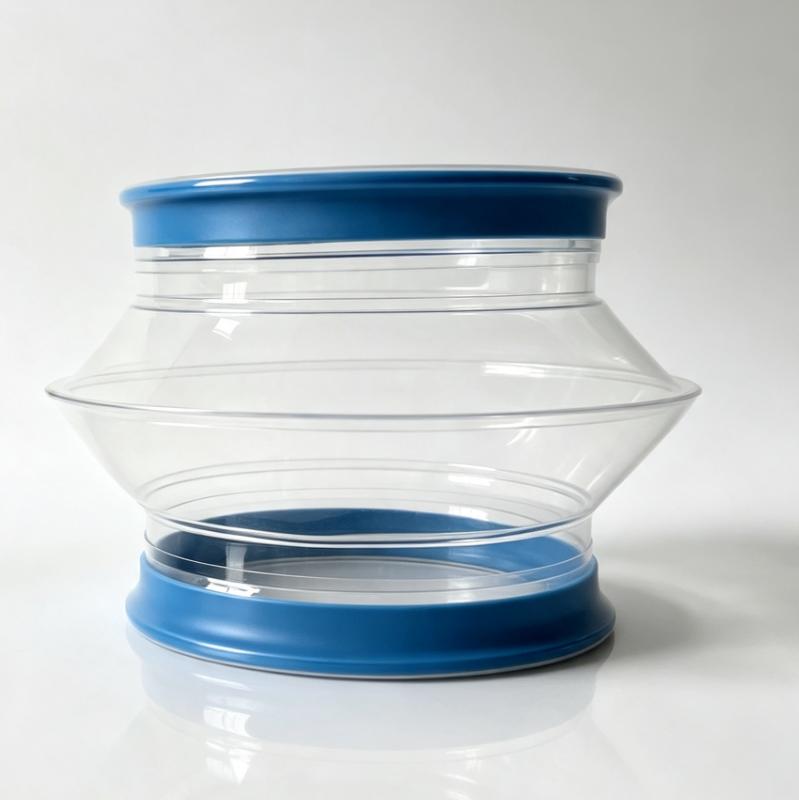
How a Flexible Connector Affects Loss-in-Weight Feeder Accuracy
A loss-in-weight (LIW) feeder measures changes in the weight of its weighing assembly over time. That makes the mechanical connections around the weighing assembly part of the measurement system, not just part of the powder-containment system. A connector that is too stiff, incorrectly sized, installed under tension, exposed to excessive lateral movement, or coupled to a pressurized process can transmit forces back into the weighing structure. This guide explains how to select an ultra-flexible, low-reaction-force connector for loss-in-weight feeders, load-cell hoppers, batching systems and multi-head weighers.
READ MORE...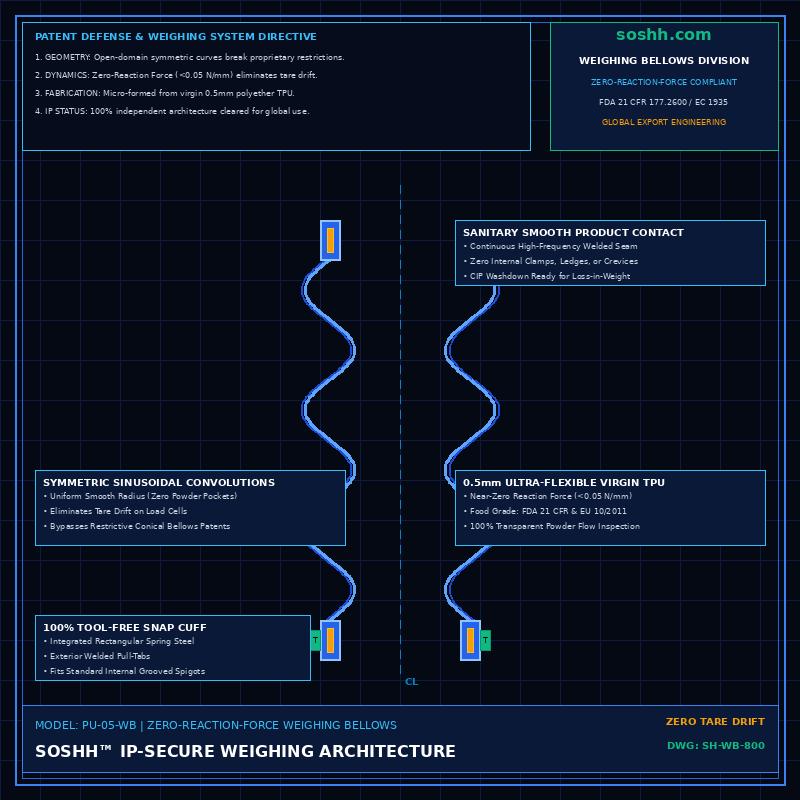
SOSHH Zero-Reaction-Force Weighing Bellows for Loss-in-Weight Feeders
Eliminate load cell tare drift on gravimetric feeders with SOSHH PU-05-WB ultra-soft polyether TPU weighing bellows. Zero reaction force, tool-free snap-in installation.
READ MORE...
How to Eliminate Load Cell Drift on Loss-in-Weight Feeders: The 80mm Installation Rule
Stop loss-in-weight scale drift and dosing errors. Learn how zero-stiffness TPU connectors and the 80mm spigot gap rule isolate load cells from vibration.
READ MORE...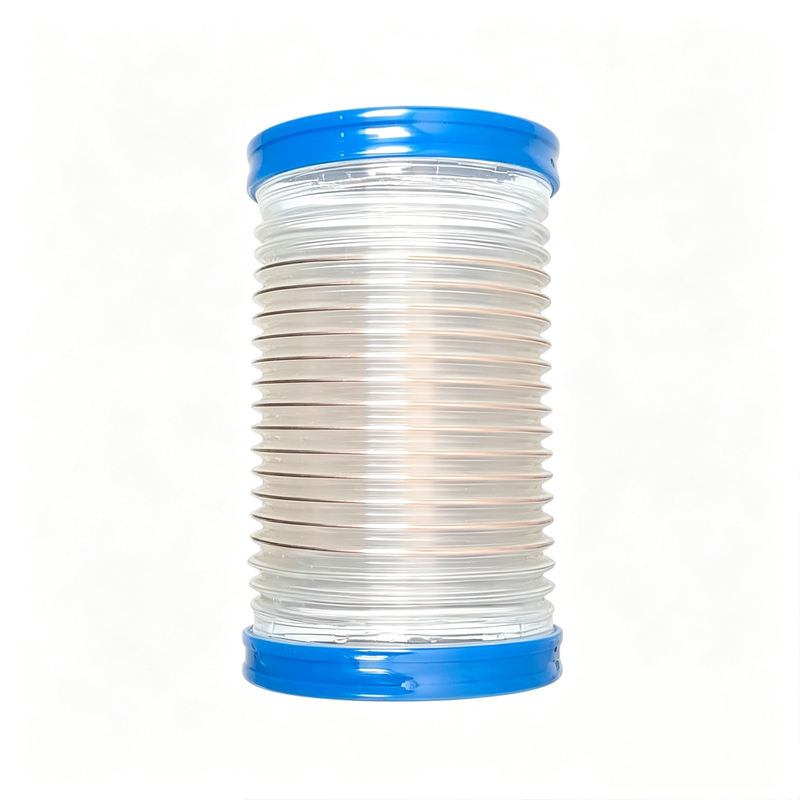
Zero Reaction Force: Ultra-Flexible Bellows for Loss-in-Weight Feeders & Hoppers
Eliminate load cell tare drift on loss-in-weight feeders and weighing hoppers with ultra-soft 70 Shore A TPU multi-convolution bellows designed for zero reaction force.
READ MORE...