




Flexible Connector FAQ: Sizing, Materials, Installation & Troubleshooting
Find direct answers to the most common flexible connector questions on sizing, material selection, CIP washdown, ATEX static control, vacuum collapse, sifter tearing and tool-free installation. Each answer links to a detailed SOSHH engineering guide so you can specify the correct connector with confidence.
Quick Navigation:
- Sizing & Connection | 2. Tearing & Wear | 3. Material & Food Safety | 4. Static & ATEX | 5. Sealing & Gaskets | 6. Weighing Accuracy | 7. Vacuum & Pressure | 8. Temperature & SIP | 9. Custom & Non-Standard
Use the symptom categories below to jump to your question. If your problem is not listed, contact our engineering team with your spigot diameter, installation gap, temperature and media - we respond with a specification, not a brochure.
1. Sizing & Connection - Fitting Different Diameters
The two most mis-specified dimensions in flexible connectors are the spigot diameter and the installation gap. Get either one wrong and the connector either falls off or tears at the clamp edge.
Q: My two connection points are different diameters. Can I still use a snap-in connector?
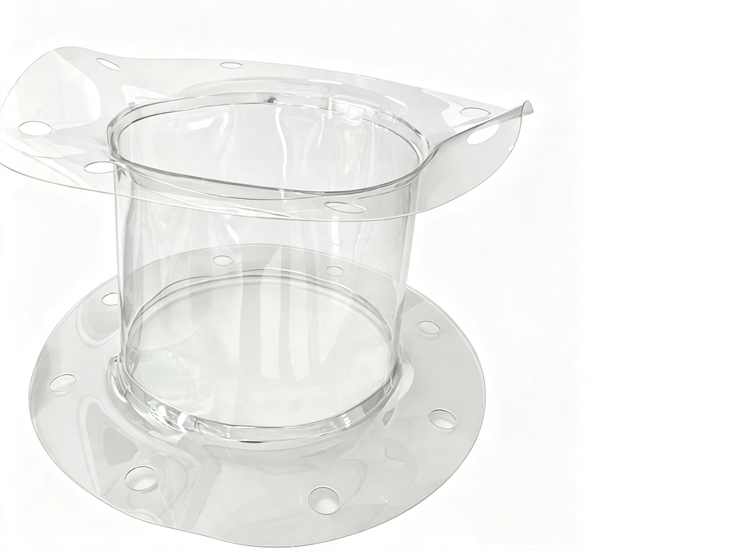
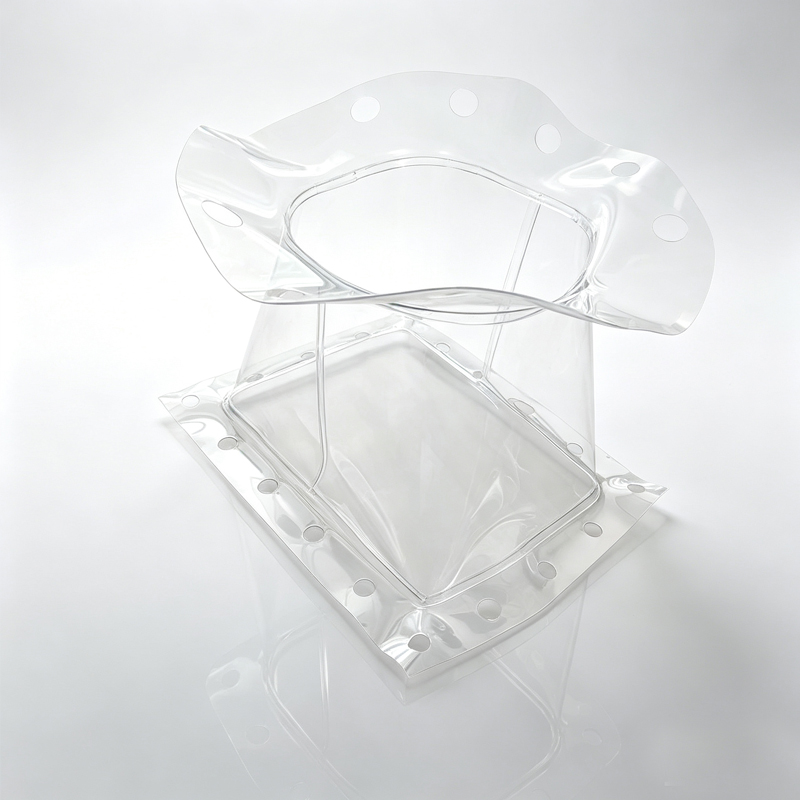
A: Yes. Specify a tapered or conical reducer sleeve. Custom square-to-round and offset conical sleeves are fabricated to exact millimeter dimensions with zero tooling fees - see our Custom Square-to-Round & Conical Reducer Sleeves guide.
Q: What is a spigot, and how do I measure the installation gap?
A: The spigot is the rigid lip the connector snaps onto. The installation gap is the distance between the two spigot faces when installed. Measure it at the smallest point - a wrong gap causes either slack or clamp-edge tearing. Compare full sizing logic in the Flexible Connector Material Selection Guide.
2. Tearing & Wear - Sifter Sleeve Failure
Q: My sifter sleeve keeps tearing at the clamp edge. Why?
A: Clamp-edge tearing is almost always stress concentration at the pinch point, where rigid clamping meets flexible polymer under high-frequency vibration. Polyether TPU has far higher tear strength than silicone and survives over 1,000,000 vibration cycles. See Why Vibrating Sifter Sleeves Tear at Clamp Edges.
Q: Is polyether TPU more durable than silicone on screeners?
A: Yes, on vibrating equipment. Silicone tears and fatigues under dynamic shear; polyether TPU is engineered for dynamic flex fatigue resistance (-20 C to +110 C, surges to +120 C). Full comparison in the sifter tearing guide.
3. Material & Food Safety - Compliance for Food Powders
Q: Is polyurethane food-contact safe?
A: SOSHH food-grade connectors comply with FDA 21 CFR 177.2600 (Test Report Ref: TQT4821B36E) and Regulation (EU) 10/2011. They are supplied plasticizer-free (phthalate-free) with batch declarations available. Read Is Polyurethane Food-Contact Safe? FDA 21 CFR 177.2600 & EU 10/2011.
Q: Can it handle milk powder, infant formula, sugar or wheat flour?
A: Yes. These are standard sanitary applications for virgin polyether TPU. The mirror-smooth, non-porous interior prevents powder buildup and microbial harborage, fully compatible with standard CIP washdown regimes.See Is Polyurethane Food-Contact Safe?`。
4. Static & ATEX - Grounding and Dust Explosion
Q: Is the sleeve anti-static? What surface resistance?
A: PUAS anti-static TPU provides 10^6 to 10^9 Ohm surface resistivity (static dissipative range), tested in accordance with IEC 60079-32-2. It eliminates the need for external copper bonding wires. See Anti-Static PU Connectors for Vibratory Sifters (10^6 to 10^9 Ohm).
Q: What happens if I do not bond the connector in a combustible dust zone?
A: Triboelectric charge accumulates on an insulating sleeve during rapid powder conveying and can discharge as an ignition spark. Anti-static dissipative TPU safely drains charge to ground in ATEX Zones 20, 21, and 22 as part of an engineered installation.See Anti-Static PU Connectors for Vibratory Sifters`。
5. Sealing & Gaskets - Powder Leakage Prevention
Q: Do I need a separate flat gasket or clamp band?
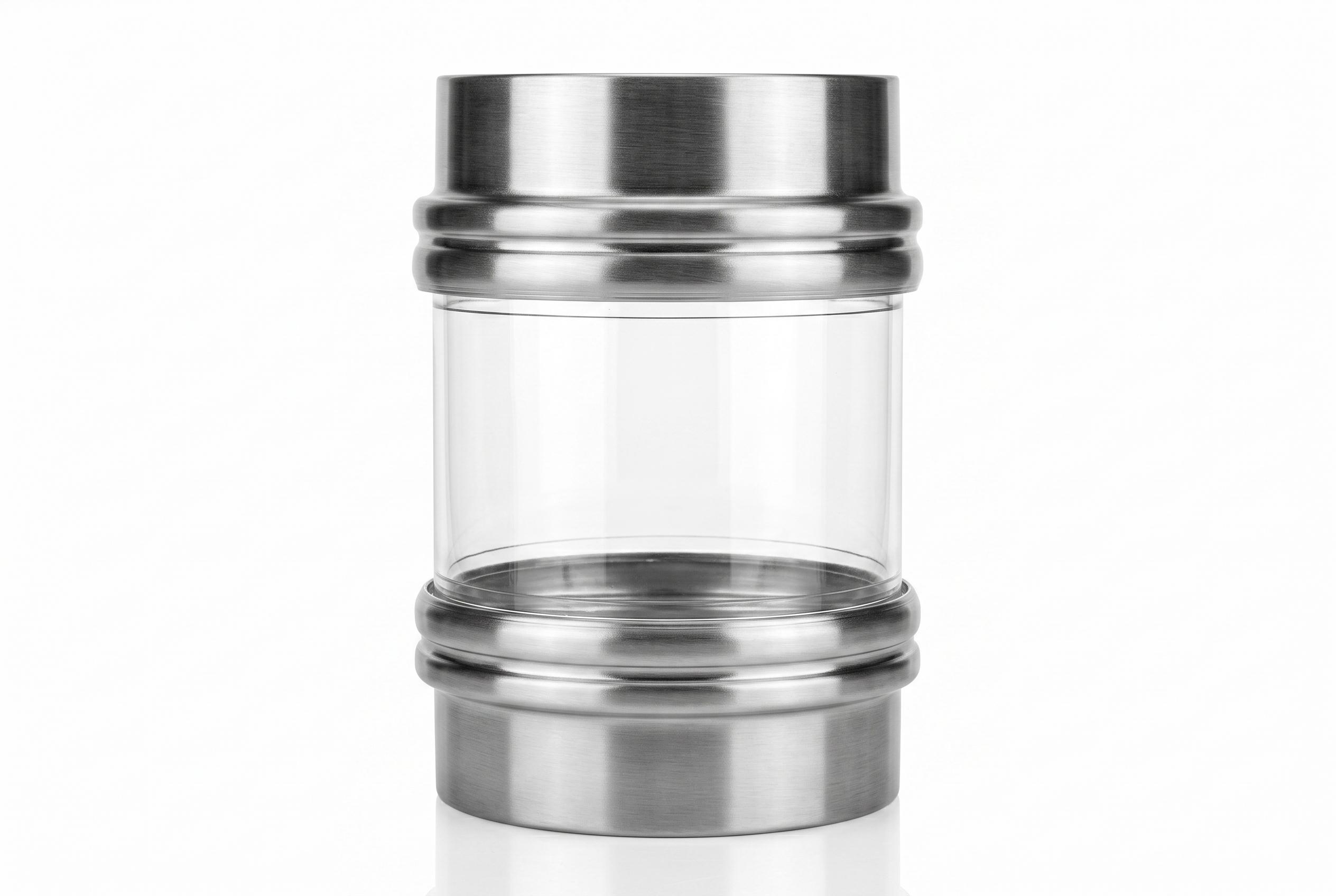
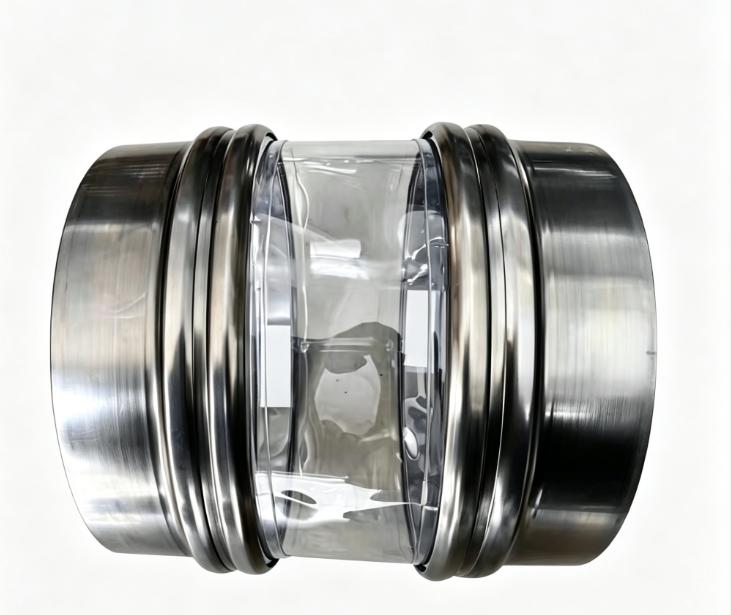
A: No. The tool-free snap-in system seats directly into precision-rolled spigot grooves. The outward tension creates an airtight seal with zero gaskets to misalign, degrade, or contaminate powder streams. See Quick-Clamp TPU Connectors: 30-Second Dust-Tight Changeover.
Q: Can it seal fine fluid-like powder without puffing?
A: Yes. The 100% dust-tight snap-band seal completely contains micronized powders, carbon black, and battery precursors under operating pressures up to +0.35 bar.See Quick-Clamp TPU Connectors: 30-Second Dust-Tight Changeover`。
6. Weighing Accuracy - Eliminating Scale Tare Force
Q: Will the connector affect my load cell accuracy?
A: A stiff or misaligned connector transfers parasitic mechanical loads into load cells, resulting in calibration drift and batching errors. For loss-in-weight (LIW) feeders and weigh bins, specify ultra-flexible thin-wall bellows. See Zero Reaction Force: Ultra-Flexible Weighing Bellows.
Q: What specification should I choose for high-precision batching?
A: Specify LightTC series (0.5 mm or 0.8 mm wall thickness) multi-convolution bellows. They absorb 3D equipment vibration while exerting negligible axial reaction force on sensitive weighing cells.See Zero Reaction Force: Ultra-Flexible Weighing Bellows`。
7. Vacuum & Pressure - Preventing Negative Pressure Collapse
Q: Will the sleeve collapse under vacuum?
A: Standard thin-wall flexible sleeves pull inward under negative pressure, choking the line and wearing against opposite walls. For pneumatic vacuum convey lines, specify TPU sleeves with internal or external stainless steel support rings. See How to Prevent TPU Flexible Sleeves from Collapsing Under High Vacuum.
Q: How do 316L support rings work?
A: Stainless steel support rings are engineered at calculated pitch distances (typically 50 mm to 75 mm) to resist deep vacuum down to -1000 mbar while preserving complete axial and lateral flexibility.See How to Prevent TPU Flexible Sleeves from Collapsing Under High Vacuum`。
8. Temperature & SIP - High-Temperature and Solvents
Q: What material handles temperatures above 150 C?
A: Pure polyether TPU is rated up to +110 C continuous (peak +120 C), and high-temp PUHT handles +150 C continuous (peak +165 C). For continuous processes above 150 C or SIP steam sterilization, specify CNC-machined virgin PTFE bellows (-70 C to +260 C continuous, peak +280 C). See CNC Machined PTFE Bellows: 260 C High-Temperature & Chemical Resistance.
Q: What should I specify for aggressive acids, bases, or NMP battery solvent vapors?
A: Virgin PTFE provides near-universal chemical inertness across pH 0-14. Where TPU swells when exposed to strong organic solvents, CNC-turned PTFE bellows deliver long service life without embrittlement.See CNC Machined PTFE Bellows.
Q: Can you manufacture rectangular-to-round, offset, or transitional sleeves?
A: Yes. Rectangular-to-round hoppers, offset chutes, and conical reducers are fabricated to exact millimeter drawings with zero mold tooling fees. See Custom TPU Flexible Sleeves.
Q: Why is there no tooling charge for custom geometries?
A: SOSHH utilizes precision CNC plotting and high-frequency thermal welding from virgin sheet material rather than rigid injection molding, enabling bespoke prototyping with rapid turnaround.
Technical Engineering Support
Still evaluating flexible connector specifications for your plant? Contact our technical engineering team with five process parameters:
- Spigot outer diameter (OD)
- Operating installation gap (IG)
- Process media and particle size
- Continuous and peak operating temperatures
- System operating pressure or vacuum level
We provide an engineering drawing and material recommendation tailored directly to your operating envelope.
Related Posts